
In 2025, the world is deep in the “Ozempic Boom,” and almost everyone seems obsessed with shrinking as fast as possible. Social media is full of transformation photos, scale screenshots, and “miracle drug” testimonies. But beneath this culture of rapid weight loss lies a silent metabolic crisis, Sarcopenic Obesity, a condition where someone maintains a normal weight but carries dangerously low amounts of skeletal muscle. And here’s the truth many people don’t hear enough: muscle-centric medicine, not weight loss alone, is what drives real metabolic health after 40.
Muscle-centric medicine is the idea that skeletal muscle—our body’s most powerful metabolic organ—is the foundation of long-term health, stability, and independence. Think of it like a metabolic 401k. Just as you invest money to secure your financial retirement, you must invest in muscle to secure your physical retirement. Every workout, every protein-rich meal, every step you take is a “deposit” into this lifelong account.
This article shifts the conversation from shrinking your body to strengthening it. You’ll learn why muscle is the missing link in aging well, why weight loss alone is a metabolic trap, and how simple daily actions can protect your health span, energy, and independence for decades.
What is Muscle-Centric Medicine?
For years, the spotlight in medicine was all about body fat — BMI, weight loss, all of it. But Muscle-Centric Medicine totally flips that mindset. Instead of treating fat as the main villain, it shows that our skeletal muscle is actually the real driver of long-term health, energy, and longevity. Building and protecting our muscle isn’t just about looking fit — it’s the foundation of a stronger, healthier life.
Muscle is an Organ, Not Just Aesthetics
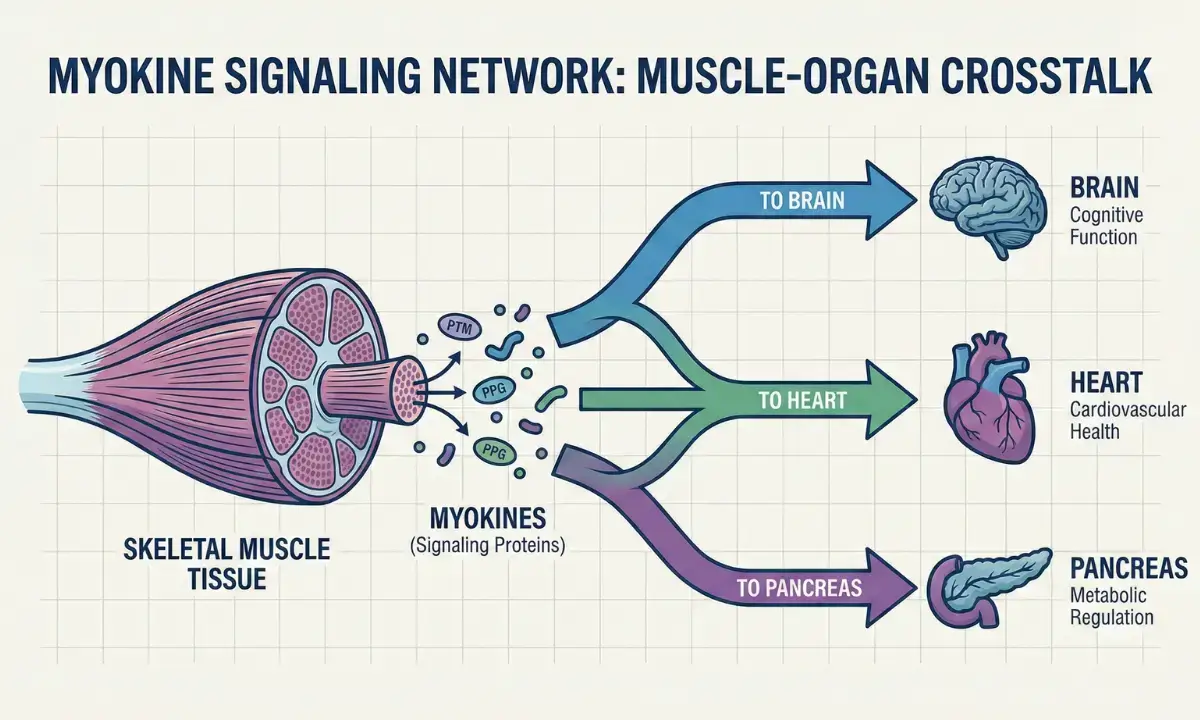
Most people think of muscle as just the stuff that helps you lift things or look fit. But in reality, your skeletal muscle is the biggest endocrine organ in your entire body.
Whenever you work out—especially with resistance training—your muscles release special signaling proteins called myokines. These little messengers travel through your bloodstream and talk to almost every organ. They help lower inflammation, boost your brain’s production of BDNF (a mood-lifting, antidepressant-like chemical), and even tell your bones to get stronger.
On top of all that, muscle is your main metabolic engine. Around 80% of the sugar your body processes with insulin is handled by your muscles. Basically, muscle acts like a “sugar sink.” The more muscle you have, the more carbs you can store as glycogen instead of turning them into body fat. But when you lose muscle, you lose the system that manages blood sugar—opening the door to insulin resistance and Type 2 diabetes.
The Silent Thief: Sarcopenia
If muscles are our engine, sarcopenia is the rust that slowly wears it down. Sarcopenia is the natural loss of muscle tissue as we age. Without action, adults can lose 3% to 8% of their muscle mass every decade, starting as early as 30. By 60, this decline speeds up.
A big reason for this is something called anabolic resistance.
Imagine your muscles as a house and protein as the construction crew. At 20, the door to the house is wide open, just a little protein sparks muscle growth. By your 40s and 50s, the door becomes sticky, even locked at times. Your body struggles to turn protein into muscle.
That’s why the old advice to “eat less” as you age can backfire. To fight anabolic resistance, you actually need more high-quality protein. Plus, heavier resistance training is essential to preserve what you have.
The “Sandwich Generation” Risk Factors
If you’re between 40 and 60 years old, you are likely a part of the sandwich generation, at the same time caring for aging parents while supporting your own children. The physical and emotional demands of caregiving create a perfect storm for muscle loss and metabolic decline.
1. Stress Eats Muscle
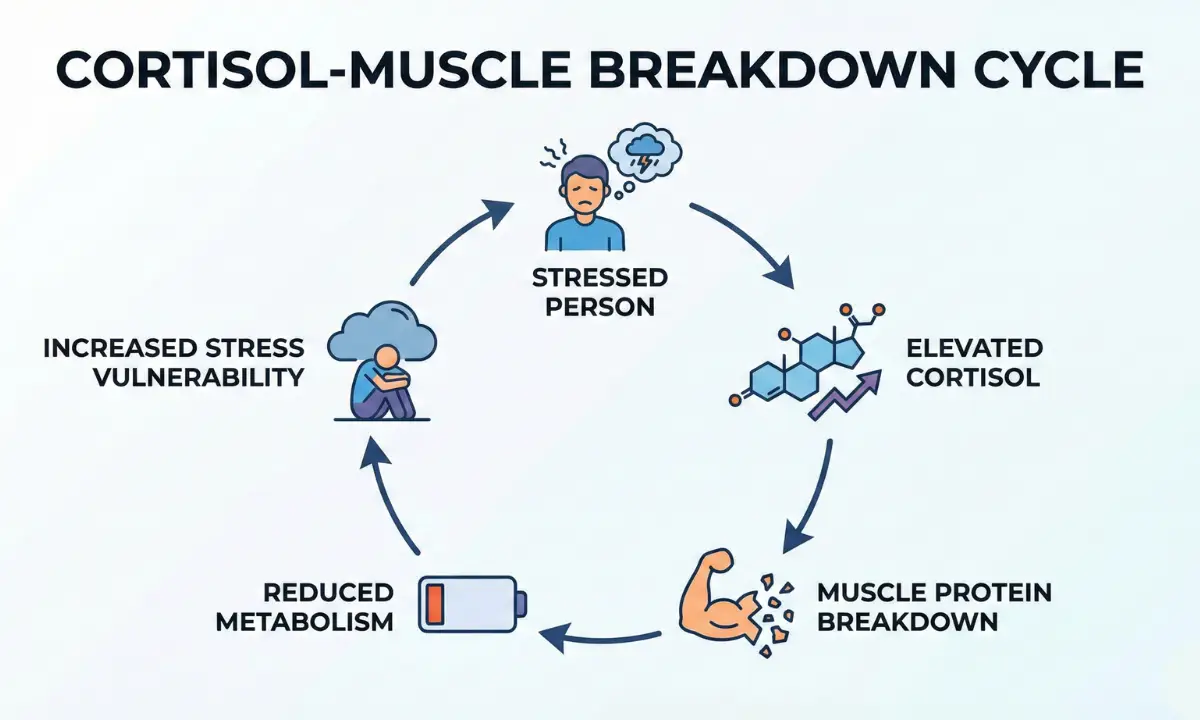
We often talk about “caregiver burnout” as an emotional state, but it is also a metabolic catastrophe. Chronic stress keeps your body in a sympathetic dominant state (fight or flight), leading to perpetually elevated levels of cortisol.
Biologically, cortisol is catabolic—it breaks things down. When cortisol is high, your body perceives an emergency. To get quick energy, it triggers gluconeogenesis, a process where your body breaks down amino acids from your muscle tissue to convert them into glucose. In plain English: stress literally eats your muscle to fuel your anxiety.
2. The “Ozempic Body” Warning
This brings us to the rise of GLP-1 agonists like Wegovy and Zepbound. These drugs are game-changers for managing obesity, but they carry a major warning for the Sandwich Generation.
Clinical studies show that up to 40% of the weight lost on these medications can be lean mass—muscle and bone—if patients don’t focus on resistance training and enough protein. This is what’s called the “Ozempic Body” effect: the scale drops quickly, but your Basal Metabolic Rate (BMR) can fall below where it started.
For example, if you shed 20 pounds but 8 of those pounds are muscle, you’ve effectively aged your metabolism by ten years. That sets the stage for the classic yo-yo effect. Once you stop the drug or ease up on your diet, the weight returns as fat. Sadly, the lost muscle doesn’t automatically come back.
Solution 1: Nutrition – The “Protein Pacing” Protocol
You can’t exercise your way out of a low-protein diet, especially after 40. To combat anabolic resistance, we use a strategy called Protein Pacing.
The 1g Rule
The top advice in muscle-centric medicine is simple: eat about 1 gram of high-quality protein for every pound of your ideal body weight each day.
For example, if your goal weight is 150 pounds, aim for 150 grams of protein daily. For healthy adults, this isn’t too much—it’s safe and backed by research. After 40, it’s especially important to fight anabolic resistance and preserve muscle.
So, what counts as “high-quality” protein? Choose whole sources that give all essential amino acids. Think lean meats, poultry, fish, eggs, dairy, or plant-based options like quinoa, soy, and blended protein mixes.
Protein does more than build muscle. It keeps you full longer, naturally cutting calories. It also has the highest thermic effect of any macronutrient, meaning your body burns more calories digesting it than carbs or fat. Most importantly, getting enough protein helps keep lean mass, even if you’re eating fewer calories.
The First Meal Matters Most (The “30/30 Rule”)
One of the biggest mistakes people make is starting their day with coffee only, delaying their first meal until lunch. This pattern is metabolically damaging, especially after 40.
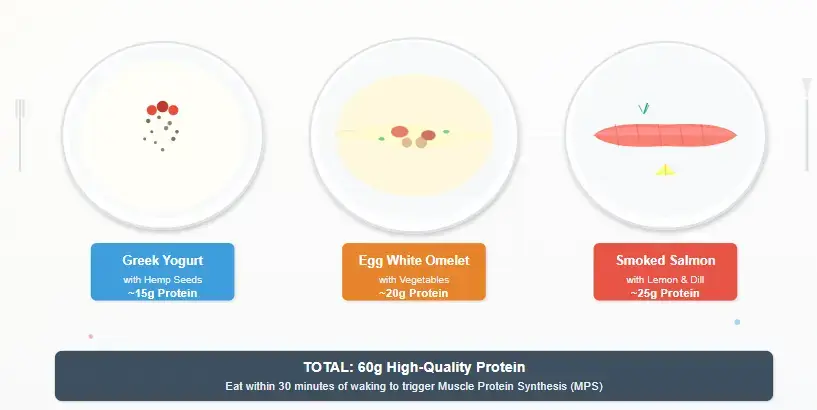
The fix is simple but powerful: the 30/30 rule. Consume 30–40 grams of protein within 30 minutes of waking up—or at least, make it your first meal of the day. This early protein bolus triggers muscle protein synthesis (MPS), the biological process of building and repairing muscle tissue.
Research shows that the anabolic response to protein is highest in the morning after the overnight fast. Your muscles are primed and ready to absorb amino acids and start the repair process. Missing this window means missing your most effective opportunity to stimulate muscle growth each day.
Practical examples that deliver 30-40g of protein:
- Full-fat Greek yogurt (2 cups) with 2 tablespoons of hemp seeds
- Four-egg white omelet with vegetables and a side of cottage cheese
- High-quality whey isolate protein shake blended with berries and spinach
- Smoked salmon (4 oz) with whole grain toast and avocado
The goal isn’t to eat a massive meal—it’s to focus on protein first thing. This single habit change can dramatically improve your muscle maintenance and metabolic health over time.
Solution 2: Movement – The “Exercise Snacking” Strategy
The sandwich generation faces a real problem: there just aren’t 90 minutes in a day for a full gym session. Between work deadlines, caring for family, and managing the home, structured workouts often get pushed aside.
That’s where exercise snacking comes in—a fresh way to think about staying strong and building muscle without long gym sessions.
What is Exercise Snacking?
Exercise snacking is all about short, intentional bursts of activity sprinkled throughout your day. Unlike NEAT—your everyday movements like fidgeting, walking to the car, or climbing stairs—exercise snacks are purposeful mini-workouts. They usually last just 1 to 5 minutes.
Science strongly backs this approach. Research shows that brief, frequent resistance exercises can boost insulin sensitivity, preserve muscle, and improve metabolic health. Sometimes, these mini-sessions work even better than one long workout because you can push harder in short bursts.
The trick is consistency and gradual challenge. Doing a 2-minute exercise snack three times a day, every day, beats a single 60-minute session once a week. What matters most is how often you stimulate your muscles, not how long each session lasts.
The “Caregiver’s Circuit” (Practical Examples)
Here are real-world exercise snacks designed specifically for busy caregivers and professionals:
The Kitchen Sink Squat: While your morning coffee brews (approximately 3-4 minutes), perform 20 bodyweight air squats. Focus on depth and control. This activates your largest muscle groups (quadriceps, glutes, hamstrings) and creates a metabolic surge that lasts hours.
The “Zoom” Deadlift: Keep a kettlebell or dumbbell under your desk. Between video meetings or during your lunch break, perform 1 minute of kettlebell swings. This explosive movement pattern strengthens your posterior chain, improves grip strength, and elevates your heart rate quickly.
The Stair Master: If you have stairs in your home or office, commit to taking them two at a time for power development instead of walking normally. This simple modification transforms ordinary stair climbing into a plyometric exercise that builds explosive strength.
The Grocery Carry: Instead of viewing grocery shopping as a chore, treat your shopping bags as a “farmer’s walk” exercise. This loaded carry builds real-world functional strength, particularly grip strength, while developing your core and stabilizer muscles.

The beauty of exercise snacking is its sustainability. You don’t need to change clothes, drive to a gym, or carve out large blocks of time. These movements integrate seamlessly into your existing routine while delivering meaningful metabolic benefits.
Solution 3: Tech & Tracking – Measuring What Matters
In muscle-centric medicine, the traditional bathroom scale is worse than useless—it’s actively misleading. Total body weight tells you nothing about body composition, metabolic health, or functional capacity.
Stop Weighing, Start Scanning
Ditch your cheap bathroom scale and switch to bio-impedance analysis. Devices like Withings Body Comp, Garmin Index S2, or professional InBody scans at gyms measure what really matters: skeletal muscle mass, body fat percentage, visceral fat, and even muscle distribution across your body.
These numbers reveal your true metabolic picture. You could “gain weight” while losing fat and building muscle—a win that a regular scale might trick you into thinking is failure. On the flip side, you might drop pounds but lose valuable muscle, looking “successful” on the scale while weakening your metabolism.
Track your skeletal muscle index every month. It shows your muscle mass compared to your height and gives a clear target to improve. Notice your visceral fat drop as you build muscle and boost metabolic health. These metrics tell the real story of your body transformation.
The #1 Biomarker for Longevity: Grip Strength
Among all the health metrics you could track, grip strength might be the most telling. Research shows it predicts overall health and even longevity better than traditional markers like blood pressure or cholesterol.
Why is that? Grip strength reflects your total-body muscle power and function. A strong grip signals healthy muscles, good neuromuscular coordination, and resilient connective tissue. On the other hand, a weak grip can show up years before noticeable functional decline.
The good news: testing your grip is cheap and easy. Grab a handheld dynamometer online for $20–40 and check your strength each month. Track the numbers. If you see them drop, it’s a clear warning that your muscle-focused health strategy needs a boost.
Benchmarks differ by age and gender, but generally, men should aim for a grip above 40 kg and women above 25 kg. Hitting these numbers puts you in the “low risk” zone for health complications.
Recovery Tracking (Whoop/Oura)
Wearable recovery trackers like Whoop bands and Oura rings do more than count steps. For the sandwich generation juggling chronic stress, they track heart rate variability (HRV)—a key marker of your autonomic nervous system’s balance.
Low HRV signals that your body is stuck in fight-or-flight mode. This spikes cortisol and can break down muscle tissue. High HRV shows strong rest-and-digest role, which supports muscle recovery and growth.
Checking HRV daily lets you see when caregiver stress is taking a real toll. With this insight, you can act early—get extra sleep, practice stress-relief techniques, or ease up on workouts—before burnout or overtraining sets in.
The goal isn’t perfection; it’s awareness. These trackers help you manage your body like a “metabolic 401k,” using data to make smart, proactive choices—just like you would with your finances.
Conclusion: Building Your “Body Armor”
At the end of the day, muscle-centric medicine isn’t about looks. It’s about building real “body armor” for the second half of your life.
Muscle can save you. It’s what helps you catch yourself on icy sidewalks instead of breaking a hip. It’s what keeps you strong enough to carry your own luggage well into your 80s. Simply put, muscle is the currency of independence.
You don’t need to change everything at once. Start small. Try one “Exercise Snack” like kitchen squats, and one “Protein Upgrade” like a 30g breakfast. Start investing in your metabolic 401k this week. Your future self—and your metabolism—will thank you.
Recommended Resources for Curious Minds
To help you implement the muscle-centric Medicine, here are a few tools and resources that can support your journey.
- Handheld Digital Dynamometer Grip Strength Tester This simple tool is the gold standard for tracking your “biological age.” Measure your grip strength monthly to ensure your muscle-building efforts are working.
- WITHINGS Body Smart – Accurate Scale for Body Weight, Stop looking at just weight. This scale connects to your phone to track Muscle Mass, Water %, and Visceral Fat so you can see the real changes in your body.
- Forever Strong by Dr. Gabrielle Lyon
- Outlive: The Science and Art of Longevity by Dr. Peter Attia