

Have you ever stopped and wondered what we can do with today’s computers? Yes, we have come a long way. But what if I told you that there is a way to take technology even to the next level? By that, I mean quantum superposition. This leading edge of computing power, is a strange yet amazing concept from quantum mechanics, is held within the key. At least, with quantum superposition, we are seeing possibilities faster than our best processors today. Let’s begin by simplifying our understanding of this concept. This is how we will show the future of technology, for starters, starting now. What is Quantum Superposition? Quantum superposition can be viewed as complicated, but it is really quite simple. Suppose you are flipping a coin. A coin in our normal world is either heads or tails. But in the quantum mechanics, that coin can be heads, or it can be tails, at the same time! Sounds weird, I know. That is the reality at the quantum level. Superposition is special because of this ‘both at once’ idea. Quantum particles simply do not make choices. Because they can hold multiple states at once. Our regular computers can only solve one step at a time. In contrast, quantum computers can find multiple solutions at once. That is where the magic happens. The Impact of Quantum Superposition on Computation Why this is important for computers? Modern computers solve problems step-by-step. They process instructions one at a time, even if they do it superfast. But a quantum computer, using superposition, does not work this way. It can handle multiple paths or possibilities all at once, so, we should, thanks to superposition. How does this boost computing power? Let’s find out: Quantum superposition is not just a wank. That could be big, leading to real breakthroughs, from encryption to climate modeling. What would it be like if we could solve big problems faster than ever? Quantum Superposition is Already Making Waves Quantum superposition is not just a theory. In fact, it is already making some difference in many areas. Let’s take a look at where you can see it in action: 1. Artificial Intelligence As quantum superposition could make this much faster, AI requires a huge amount of data processing. With quantum power, AI could learn and adapt at really warp speed. 2. Cybersecurity Quantum computing could lead to better encryption methods, making the thing harder to crack. This is a huge advantage for a world where data security risks are everywhere. 3. Drug Discovery and Healthcare Molecules and proteins can also be simulated faster by quantum computing, increasing the speed of simulations. This will help scientists find new medicines faster. This is a big deal in healthcare, where every day counts. There are so many areas that could win and thus change the game. Quantum superposition gives us the capability we have always dreamed about. Challenges in Quantum Superposition for Computers Quantum computing has a potentially huge industry; and it just has a few challenges. Quantum particles are extremely difficult to control. There they are: superpositions of states but unstable, and even small disturbances may break their superposition. Quantum computers are very hard to build, let alone maintain. And then there is the cost. Quantum computing technology is still expensive. Right now, only big tech companies and labs can afford it. I believe scientists will keep moving forward, and we’ll get there. There is resolution to these challenges, and that is how superposition will be more available and power more broadly. What’s next for the quantum superposition? So what could this lead to? We are just getting started. But what if quantum computers could help solve climate change? Could they cure diseases or get us to the edge of space? It gives us a superposition technology. This allows us to process all that stuff at incredible speeds beyond our current imagination…Big tech and the government have invested in quantum, and many universities are already spending big on it. However, quantum superposition will change everything, and they know it. The possibilities are huge, and the way forward is just that, just beginning. “If you think you understand quantum mechanics, you don’t understand quantum mechanics.” — Richard Feynman This is always a quote that reminds me of the mystery of wonder. Alternatively, it reminds me of the mystery that quantum mechanics holds. This is a reminder that there is a lot to learn. In turn, there is a lot that we have not yet discovered how to unlock. Final Thoughts Quantum superposition is more than a hard thing to believe in, it is our technological future. It is a way to solve problems faster and better than before possible. Competition is fierce, but as we advance, we get closer to realizing a world powered through quantum computing. It’s an exciting prospect for me. I can’t wait to see what quantum superposition will bring to our everyday lives as it becomes part of our technology.

Epigenetics and Cellular Metabolism: Fueling Health Through Gene Expression
Have you ever wondered how your cells decide what to do every single day? The gene expressions are making this decision rather heavily because they tell us inside our cells what to do. The process of gene activity without changing the DNA is called epigenetics. It brings a new layer of control. Our cellular metabolism is affected by epigenetic changes that modify whether genes are ‘on’ or ‘off. That’s how that works every cell every day. This new relationship between epigenetics and cellular metabolism explains how the factors change our genes. The factors to support overall health include diet, stress, and, in the case of live boxing, exercise. Epigenetics’ Role in Health Epigenetics looks complicated, but it’s actually quite easy to understand. The gene expression changes and don’t change the DNA structure. Imagine our genes as instructions and epigenetics as the highlighter highlighting things. This kind of highlighting enables our cells to activate the specific genes when needed. Our overall health largely depends on it. Why everyday factors influence this process is a surprise. For example, the genes can be activated by nutrients in our food, environmental toxins, and stress., knowing how our daily lifestyle choices affect our health. How Cellular Metabolism Powers Our Body The process by which we turn the food into energy is known as cellular metabolism. Then, cells use that energy to do different things, like muscle contractions and breathing. Without good cellular metabolism, we will slow down, feel tired, or be sick. Our genes control metabolic processes. Our cells make enzymes when we get the right signal. These enzymes help to break down the food and release the energy. It is used to repair tissues with this energy. The effect this has is that we could have an environment such that our cells are not properly able to convert these nutrients into energy because gene activity controlled by epigenetic mechanisms is being affected. Methylation and Gene Expression DNA methylation is an important means of epigenetics. The process of methylation “tags” genes with chemical markers, acting as a dimmer switch on a light, for example. Each gene has a different activity level when methylated; its level can increase or decrease. These tags alter metabolism as genes responsible for energy production respond to it. However, methylation can become out of balance, and this can lead to health problems. Abnormal methylation patterns are seen in chronic diseases such as obesity and type 2 diabetes. Disrupted metabolism is directly linked to these conditions. Therefore, methylation patterns must be maintained to create energy and aid in a healthy body. Histone Modification and Metabolism There is another important role of histone modification for epigenetics. Proteins that help cells find DNA by allowing them to organize it are the ones. Histones are gatekeepers. Wild-type modifications of histones ‘open’ or ‘close’ the gate to gene expression. The histone modifications modify genes that are essential for cellular metabolism and thereby the adaptation of the cell to a changing environment. Histones of muscle cells can be modified to increase their energy production. This process is reinforced, for example, during physical activity for endurance and performance. That adaptability suggests gene activity and metabolism can be tweaked by lifestyle. Lifestyle Choices and Epigenetic Health What you do determines what happens to your genes and ultimately how you feel. Food, exercise, and stress management are all important in gene activity. Healthy methylation patterns occur in the bodies of people who eat a diet rich in leafy greens. You should also include whole grains and protein. For epigenetic processes, the opposite is true. Poor dietary choices, such as too many processed foods, can disrupt epigenetic processes. These choices can also harm metabolism. And exercise supports healthy gene expression. The studies published on Thursday show that regular exercise strengthens histone modifications. This is especially true in muscle cells. It increases the production of energy and flexibility. But on the other hand, chronic stress can be bad for you and affect the way genes are expressed. As the results show, it is therefore wise to live a good life, keeping our metabolism strong. Steps to Support Epigenetic Health Applications and Future Insights Scientists understand how epigenetics and cellular metabolism work. They are looking for ways to tailor these processes to individual health. For example, under customized lifestyle plans, they may adapt more effectively to metabolic disorders. These disorders typically result from genetic or epigenetic abnormalities. One day, health professionals will personalize diet and exercise recommendations. They will use an individual’s genetic and epigenetic profile to maintain cellular health. We learn more about the epigenetic effects of different foods and behaviors. As a result, we may gain a greater grip on our metabolism. These discoveries could lead to innovative treatments for health problems. These include issues associated with changes in how the body processes food, such as obesity and diabetes. Table of Nutrients and Their Epigenetic Benefits Nutrient Epigenetic Impact Food Sources Folate Supports DNA methylation Leafy greens, legumes Vitamin B12 Maintains healthy methylation Fish, eggs, dairy Polyphenols Promotes healthy histone modifications Berries, green tea Omega-3 fatty acids Reduces inflammation affecting gene activity Salmon, flaxseeds Conclusion Through the exploration of the fascinating world of epigenetics and cellular metabolism, we gain an understanding that gene expression is not only a blueprint for life (and vice versa), but an integral part of our health and our energy. However, with the right diet, regular exercise and good stress management we can shape these processes and help build a vibrant healthy life. Epigenetics demonstrates we have the power of lifestyle to impact our genes, and the choices we make each day really do fuel our health from inside out.

Quantum Gravity: Bridging Gaps in the Universe’s Origins
The universe is a place of wonders and mysteries. Quantum gravity can play an important role in understanding this universe. Quantum gravity theory tries to combine the physics of big masses with the tiniest particles. As we look at the black holes or at the beginning of time, we find physics everywhere. Our great scientists, Niels Bohr and Max Planck, helped us a lot. They contributed significantly to understanding the mysteries of this universe. A mystery remains unsolved. How do Einstein’s gravity and quantum mechanics fit together in the theory of everything? This is the time when quantum gravity plays its crucial role. What is Quantum Gravity? Quantum gravity tries to combine the two different ideas. Gravity, which defines big things like planets and stars, while quantum mechanics deals with tiny objects called atoms. As Einstein described, gravity bends space time as heavy balls on a trampoline. On the other hand, quantum mechanics works with probabilities, uncertainty, and discrete particles at the microscopic level. What is important? Quantum gravity explains the concepts like black holes, dark matter, and Big Bang. It would be a step towards a common view of the universe’s origins and ultimate fate. How Quantum Gravity Transform Our Concepts Quantum gravity not only gives the answer of scientific queries. It can also change the way we feel about our place in the universe. Quantum gravity resolve some mysteries, here is a look at some of them: Mystery Current Theory Quantum Gravity’s Potential Black Holes Singularities and Event Horizon A potential explanation for the information paradox Big Bang Standard Big Bang Theory New ideas about how and why the universe expanded Dark Matter Unseen Mass A possible quantum based explanation for its properties Top Quantum Gravity Theories The theories about quantum gravity are different from each other. Here is a succinct summary: These theories, while distinct, all try to solve the same problem: at the smallest, quantum level, how gravity behaves. Strong in each of its own right, but far from proven, there’s still so much more to find out. Current Research and Tools For the full quantum gravity theory, we use cutting edge tools. Here are some approaches researchers are using: But even though it might seem all theoretical, quantum gravity could one day be applied in the real world. What if we suddenly became faster at building rockets? We could achieve this by better understanding gravity. Another possibility is making new energy sources that come from quantum mechanics. There are as many as possibilities as there are stars in the universe. What is Next? The search towards the quantum gravity is complicated, long, and hazy. But it does not mean that scientists are giving up this research. Each one is still exploring a different path with its own set of challenges. This is what Stephen Hawking once said: The ultimate triumph of human reason would be a complete theory As we conduct more experiments, we are moving towards unraveling the mysteries of the universe. Humanity has faced these mysteries for hundreds of years. References
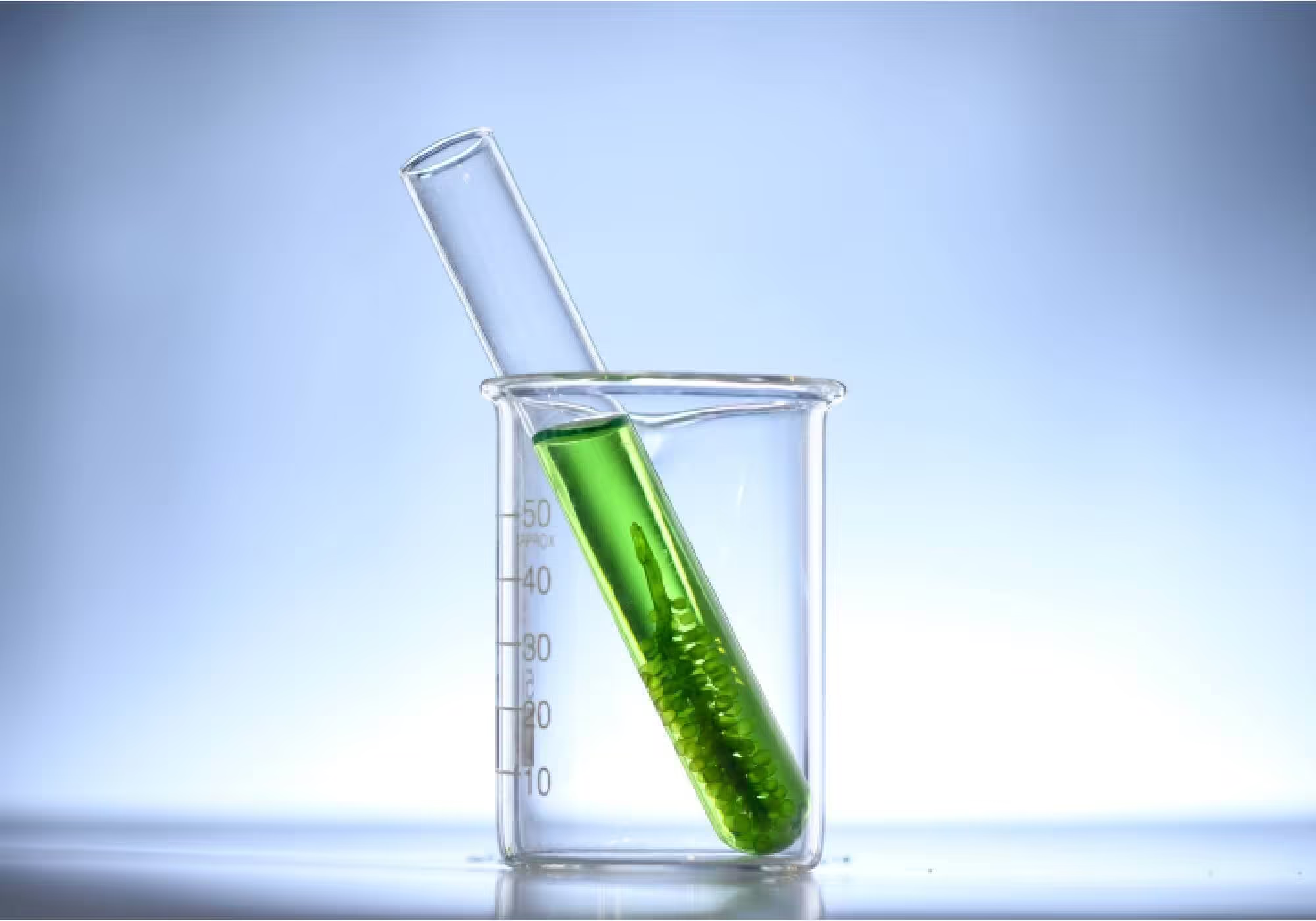
Organic Chemistry Powering Biofuels: Renewable Energy’s Green Revolution
Our planet is now in need of clean energy solutions. And biofuels are the perfect solutions for this demand. Organic chemistry is at the core of this green revolution. This essential field transforms natural resources into fuel. In organic chemistry in biofuel production, scientists combine plant and animal materials to replace fossil fuels with something far cleaner. Take a closer look, and you’ll see how organic chemistry shapes the biofuel’s industry. It offers an incredible path to sustainability. What Are Biofuels, and Why Are They Important? Any material that is derived from biomass like plant or algae material or animal waste is known as Biofuels. Biofuels can be regenerated easily rather than fossil fuels. That is why biofuels are considered to be the main source of renewable energy. Biofuels are of two types. Organic Chemistry’s Role in Biofuel Production Organic chemistry is one of the basic part of biofuel production. Because, organic chemistry involves in the study of carbon compounds. And these carbon compounds are also the building blocks of this biofuel. For the production of biofuels, we need to change this organic matter into liquid fuel. By using chemical reactions, we break organic matter and change plants and animal materials into biofuels. Our main purpose is to change the chemical structure of plants and waste materials. We aim to get useful fuel for our vehicles. We use enzymes to break down large molecules and adjust chemical bonds as our main processes. By these techniques, organic chemistry gives new life to biofuels. They are used as fuels for our vehicles. Primary Processes in Biofuel Chemistry 1. Fermentation for Ethanol Production Fermentation is very important in the production of bioethanol. Sugar is the main part of this process. We mainly get sugar from corns or sugarcane, and ferments them using yeast. The yeast eats sugar and as a result it produces ethanol and carbon dioxide. This process is very much like alcohol creation by yeast in brewing. Nevertheless, this is done on a larger scale for fuel production. 2. Transesterification for Biodiesel Production Biodiesel is another popular type of biofuel. Biodiesel is produced from oils and fats. Organic chemistry shines here through Transesterification. Transesterification is the process that combines oils with an alcohol, often methanol, and a catalyst. This reaction splits the oil molecules, and create biodiesel and glycerin. This process gives us biodiesel that can gives us diesel and reduce emissions. Combating Challenges in Biofuel Chemistry Although, biofuels promise for a clearer future. Their chemistry also faces many challenges, as production is one of the major hurdles. Now, produced biofuels, specially biodiesel, requires expensive feedstock and catalysts. Bioethanol production also requires a large area for crops, that can interfere with the supplies of food. Nonetheless, researchers continue developments in this field and always try to resolve this issue. For instance, algae have gained attention as a source of biofuel production. Algae grows quickly, and do not need large area for its growth. Although, it absorbs carbon dioxide during the growth. New catalysts are also being developed to make reactions faster, cheaper and more efficient. Each development in the field of organic chemistry makes biofuel production more sustainable. Environmental Benefits of Biofuels Biofuels give significant environmental benefits as compared to fossil fuels. They produce less carbon emissions. When biofuels are burnt, they produce carbon dioxide but in the balanced amount. When plants and algae grow, they absorb that carbon dioxide and contribute to the recycling of carbon in the atmosphere. On the other hand, fossil fuels release carbon dioxide in excessive amount, which increases greenhouse gases. Biofuels use that waste materials that cause harm if they are not used in any process. Biofuel production can use extra plants, animals waste or even algae, that do not need fertile land. Each biofuel produced by organic chemistry helps to reduce the environmental impact while creating renewable energy. The stone age didn’t end for lack of stone, and the oil age will end long before the world runs out of oil. — Sheikh Zaki Yamani Future of Biofuel Chemistry The future of biofuel chemistry looks very bright because, this technology gives cleaner and greener environment. Developments in organic chemistry gives more innovations to biofuel production. Algae based biofuels are amazingly effective. Algae grow in water and absorb significant carbon dioxide. They can also reduce the emissions even more reliably. Researcher are investigating to develop biofuels beyond the usual crops and waste materials. Organic chemistry in biofuel production will give more benefits than fossil fuels. With the developments, we will see biofuel empowering industries and vehicles worldwide, and contributing to a cleaner future very soon. References for Further Reading