

In our concrete cities, urban green spaces serve an important purpose. These areas of nature act as natural air cleaners, similar to big parks. Small gardens are also beneficial in our ever urbanized world. Consider urban green spaces as lungs of our cities. Trees, shrubs, and various other vegetation crank away at filtering out bad stuff in the air, meaning healthier air for all. These green areas gradually purify our urban air as plants capture carbon dioxide, along with small dangerous particles. Find out how green spaces within cities can help to improve overall air quality and the health of the environment. It is important to understand the knowledge of urban green spaces on air quality. Whatever you are a city planner, environmental enthusiast, or concerned citizen, this knowledge is paramount. This insight can help in to develop healthier cities. It creates more livable spaces for generations to come. The Role of Urban Green Spaces in Air Quality Improvement Urban green spaces act as natural air purification systems through sophisticated biological processes. Trees and plants actively filter harmful pollutants through their leaves, bark, and root systems, creating cleaner air for city residents. Key Pollutant Absorption Mechanisms: A single mature tree can absorb up to 150kg of carbon dioxide every year. It also filters out significant amounts of other harmful substances. Dense vegetation in parks and urban forests can reduce particulate matter concentrations by 20-50% within their immediate vicinity. Impact on Human Health: The size and distribution of green spaces directly influence their effectiveness in improving air quality. A study of urban parks revealed something important. Areas with at least 40% tree coverage showed the most significant reduction in air pollutants. Strategic placement of green spaces near high-traffic areas and industrial zones maximizes their air-purifying potential. Particulate matter poses a particular threat to human health due to its ability to penetrate deep into lung tissue. Green spaces equipped with diverse vegetation types include trees, shrubs, and ground cover. These elements create multiple filtering layers. They capture harmful particles before the particles reach residential areas. Temperature Regulation and Its Impact on Air Quality Urban green spaces act as natural temperature regulators in cities through two primary mechanisms: This natural cooling system is essential in limiting the formation of ground-level ozone. At temperatures above 30°C, the chemical reactions between the constituents of air pollution increase and lead to the formation of harmful levels of ozone. By lowering urban ambient temperatures, green areas also inhibit these hazardous chemical reactions. Understanding Urban Heat Islands Urban heat islands refer to the areas where the impact of human activities and infrastructure has resulted in a temperature significantly higher than that in the surrounding rural area. The difference in temperatures may go up to 7°C, thus forming hotspots of concentrated air pollution. Some typical causes are: How Green Spaces Combat Urban Heat Islands Green spaces combat this phenomenon by: The Impact of Urban Green Coverage on Air Quality Studies have depicted that with a growth of 10% of urban green coverage, the local temperatures could be decreased up to 2.5 degrees celsius, which in turn would directly address the air quality issues in heavily populated areas. Supporting Biodiversity with Urban Green Spaces Urban green spaces do much more than purify the air; they also support various ecosystems. These spaces are rich in varied species of plants. The plants form different layers of vegetation, including ground cover flora and arboreal trees. Each layer contributes uniquely to the process of air purification. How Different Plants Help Clean the Air There are various types of plants that possess a different level of proficiency in removing different pollutants: The Role of Animals in Urban Green Spaces Diverse plant life attracts birds, insects, and small mammals, forming a self-sustaining ecosystem. These animals play important roles in: The Benefits of Biodiversity for Air Purification Green spaces with diverse plant species can purify the air 60% more effectively. Research studies demonstrate this effectiveness in comparison to green areas containing only a single species of plant. The reason lies in the diversity of root systems among various plants. An improvement in soil quality due to these root systems leads to an improved air filtration system and also less dust in urban areas. Singapore’s “City in a Garden” Approach Singapore is an excellent example of the concept at play here, with its “City in a Garden” philosophy. Corridors for biodiversity were carefully planned and designed, which helped cut down air pollution by 25% in adjacent urban areas. This approach is in accordance with the tenets of sustainable urban architecture. Other similar ideas are presented in the book Dense Green: Innovative Building Types for Sustainable Urban Architecture. Social Benefits Associated with Urban Green Spaces Urban green spaces are natural refuges for the recovery of mental states and physical well-being. Studies claim that only 20 minutes in a park or garden lowers stress hormones remarkably and also helps reduce blood pressure. These natural environments create ideal settings for various physical activities: Research shows that people who live close to green spaces are more likely to be physically active on a regular basis. Their likelihood is increased by 48% compared with those who do not have easy access to such spaces. The beautiful landscape and fresh air create an accessible environment, promoting extended exercise periods. The mental health benefits are equally substantial: Well-kept green areas in the city increase residents’ contentment and lower healthcare costs related to stress treatment. Social interaction takes place in well maintained green spaces. They enable people to build better relationships inside the community. They also help in maintaining physical and mental well being. Community Engagement in Green Space Design Successful urban green spaces thrive on active community participation. Local residents bring valuable insights about neighborhood needs, cultural preferences, and usage patterns that shape effective green space design. Key elements of community-driven green space planning include: Cities like Portland and Barcelona show the impact of resident-led initiatives. They create green spaces that serve multiple functions.
How Solid-State Batteries Can Solve the Renewable Energy Storage Problem
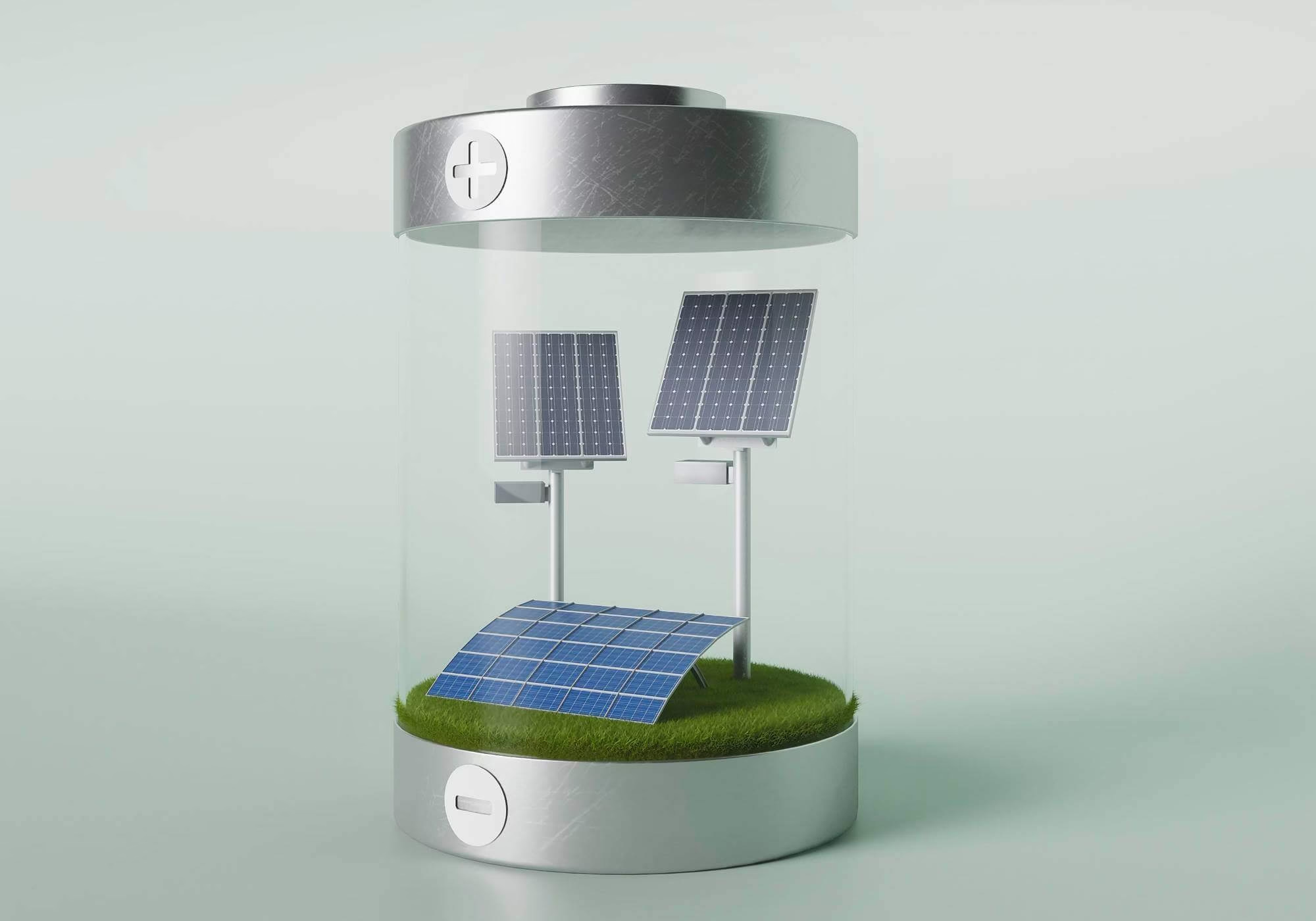
The renewable energy revolution has been gaining momentum, with solar and wind energy at the beginning. However, one challenge remains: how to store this energy efficiently. Traditional batteries, like lithium-ion, have limitations that often slow down the growth of clean energy. Among these technologies, solid state batteries possess significant potential to address storage concerns. Their unique features provide a chance to transform how we store energy from renewable sources. This change will ensure a cleaner and more reliable energy future. It makes energy production more efficient, ensuring a brighter, more sustainable tomorrow for all. What Are Solid State Batteries? Solid state batteries are a new technology that stores energy. Unlike traditional lithium-ion batteries, this new system use solid electrolytes. Solid electrolytes help ions move more easily between the anode and cathode. This improves the flow of ions, making the process more efficient. By using solid electrolytes, ion movement becomes smoother and faster, leading to better performance. The seemingly minor change in materials can have major effects on performance and safety. Solid state batteries are one of the main benefits due to their potential for higher energy density. These batteries replace the liquid form of storage for solid form, storing more energy in a more compact design. The filter helps to significantly reduce the fire hazards. They are safer for large-scale energy storage until the flammable liquids are removed. Solid state batteries are the ideal solution because of these features. However, they are crucial for satisfying the increasing energy storage demands for renewable energy. The Renewable Energy Storage Problem Environmental factors that can be unpredictable and inconsistent affect renewable energy sources such as solar and wind very much. This variability is a big challenge. When the production exceeds demand, we need to be saving energy efficiently to use it later. When generation is low, we must supply it. However, with conventional solutions, such as lithium-ion, long-distance ultrafast charging has been done. However, these drawbacks exist. Among others, they consist of safety issues, short life expectancy, and low energy density. Storage should become a part of the equation. It is this that is necessary to stabilize grid power. It also reduces our reliance on foreign fossil fuels and facilitates a move to a sustainable energy system. Scalability and cost-effectiveness of current methods are lacking, making these methods not currently scalable for large-scale applications. Solving these challenges is crucial to the realization of the full extent of the potential of renewable energy systems. How Solid State Batteries Work You must understand the differences between solid state batteries and the regular batteries. It will help you to understand how big the impact of it will be on energy storage. We also have to acknowledge these differences. Unlike lithium-ion batteries, which use a liquid electrolyte for conducting electricity, solid-state batteries utilize a solid electrolyte. This key difference leads to a variety of advantages. Advantages of Solid-State Batteries for Renewable Energy Solid-state batteries are particularly powerful in addressing the challenges of renewable energy storage because they are solid-state. One big benefit is that they have a higher energy density than conventional lithium-ion batteries. This capability, enabling the storage of greater energy within a more compact design, is essential for their functionality in extensive storage applications where surface area is generally a constant factor. Because they have higher capacity, solid state batteries can store excess energy produced during peak production times and can provide it when supply and demand are unbalanced. The other important advantage is their improved safety profile. Solid state batteries are much safer than liquid batteries and better for both home and industrial applications. Owing to a lower risk of leakage, combustion, or thermal oscillations. Finally, the solid-state design results in a longer operational life and faster charging times, making these batteries more cost-effective in the short and long terms. Safety is indicated by solid state batteries. But they also show efficiency and durability. They are an ideal source from which to integrate renewable energy into the electrical grid because of these qualities. Applications in Renewable Energy Systems Solid-state batteries are an attractive option for renewable energy-based energy storage systems. In grid storage, however, they can make a real difference. The need for an efficient and scalable storage solution is becoming more critical as the solar and wind energy grow. Solid-state batteries have high energy density and a long life of operation. With the ability to store significant quantities of energy generated during peak production periods, the cells can serve as a long-term energy storage device. From there, they can discharge this energy when the demand ramps up for a reliable power supply. Ingrid applications are not the only ones to which solid-state batteries could contribute; they could also add value to off-grid or microgrid systems, where renewable energy sources are typically the main power source. Such systems depend on secure storage to persist with a steady consideration of energy supply in the remote as well as isolated areas. The solid-state batteries can safely and reliably operate and are thus a good choice for such applications. Such batteries can enable the efficient storage of energy in both centralized and decentralized systems to bring renewable energy into a more widespread and dependable realm. Global Impact and Future Prospects Solid state batteries could have a major impact on the worldwide energy market. Reliable and efficient storage technologies are crucial as countries find ways to lower their carbon emissions and switch to renewable energy. If solid state batteries can offer superior energy density, safety, and longevity, they may become a game changing component of global energy infrastructure. But in looking to the future, there’s potential that solid state batteries can scale and be cheaper. Due to the current difficulty in producing these batteries, the costs are high, but as manufacturers refine production processes and manage to overcome these material limitations, they are expected to become less costly. So they could be more widely deployed at scale in industries including renewable energy storage and electric vehicles. Solid

The Evolutionary Impact of Cyanobacteria on Early Earth’s Climate
Microscopic organisms called cyanobacteria, often called blue-green algae, have greatly influenced the Earth’s history. Microorganisms changed the planet’s atmosphere, oceans, and even forms of life. They were special because they could make oxygen from sunlight, which changed Earth’s air completely. This change made it possible for most life on Earth to exist. This blog focuses on their evolutionary journey and their impact on Earth’s environment. The Origin of Cyanobacteria Cyanobacteria are the oldest known life forms: they appeared in the violent world of Earth’s early history (2.7 billion years ago). The atmosphere in which they lived contained carbon dioxide and methane. The thing that made them different was their ability to perform photosynthesis, as they created oxygen as a waste product. But this unique feature helped them to survive and change Earth’s environment. Feature Cyanobacteria Emergence Timeline Approximately 2.5 to 3.5 billion years ago Key Capability Photosynthesis and oxygen production Initial Impact Increased atmospheric oxygen levels The Great Oxygenation Event About 2.4 billion years ago, the cyanobacterial activity also triggered the Great Oxygenation Event (GOE). This was a turning point. Then, Earth’s climate changed from anaerobic to aerobic due to a buildup of oxygen in the atmosphere. This helped more complex life forms develop over time. At the same time, it posed a challenge to organisms that rely on environments without oxygen. Impacts of GOE: Cyanobacteria and Climate Regulation This changes Earth’s climate, and these microorganisms had a big impact. They helped carbon dioxide reductions that led to global cooling by increasing oxygen. Rock evidence from the Proterozoic Age indicates that this cooling caused glaciation events. Cyanobacteria activity stabilized the planet’s temperature so it was habitable over time. Biogeochemical Cycles In many profound ways, cyanobacteria have shaped Earth’s biogeochemical cycles. But they were also important for fixing nitrogen, as they converted the nitrogen into a form that plants can use. Meanwhile, they played an equally important role in the carbon cycle. They absorbed carbon dioxide. Additionally, they provided it where needed. They served to make nutrients accessible and, thereby, support both marine and terrestrial ecosystems. Formation of Stromatolites Stromatolites, layered rock structures occurring today and in ancient environments, have been attributed to the action of cyanobacteria. These structures tell you something very valuable about early Earth conditions. In addition to disclosing past climates, they show that cyanobacteria have the capacity to engineer ecosystems. Aspect Significance Stromatolite Formation Showcases cyanobacteria’s geological contributions Indicators of Climate Offers insights into past environmental conditions Fossil Evidence Helps trace early life’s evolution Modern Legacy of Cyanobacteria Today, however, cyanobacteria are still influencing ecosystems. However, their modern presence isn’t always smooth sailing. When they happen, the harmful algal blooms created by cyanobacteria can harm aquatic ecosystems and human health. The good thing is that scientists put their potential to use in science and technology. And they apply this in biotechnology and in renewable energy. It is done by biofuels and by carbon capture. If there is a journey to be had that’s got more questions than answers, it’s cyanobacteria’s. They are still figuring out exactly what their effects are on the evolution of the Earth. Knowing what their role is in the early climate allows researchers to compare their behavior with how they are acting now, during current environmental changes. Cyanobacteria may hold the key to future research into new ways to mitigate climate change. Lessons from Cyanobacteria Their story tells us how cyanobacteria have shaped Earth. It also shows how we’ve changed them. Studying this is valuable. The real thing they emphasize is the link between life, climate, and geology. Nature reminds us of its power to create and sustain life by transforming the whole planet. Once, Albert Einstein said, “Take a look at nature, and then you’ll understand everything.” This approach is reminiscent of the cyanobacteria journey. Key Takeaways in a List Cyanobacteria are the story of resilience and change. And the contributions they make to shaping the Earth’s atmosphere and to how modern ecosystems work are enormous. It is just a reminder of the strength of the tiny organisms. These organisms greatly influence the ongoing world. Nature learned some lessons, and we must learn from them. References
The Surprising Connection Between Nuclear Physics and Net-Zero Carbon Emissions
Global efforts to address climate change is only possible by achieving net-zero carbon emissions. Our main goal is to reduce our greenhouse gas emissions to nearly zero. If there are any remaining emissions left, we will balance them with removal technologies. In addition, we are moving towards renewable energy solutions. It is now the appropriate moment to emphasize the significance of nuclear physics. This is an important step on the way to a carbon-free future. Nuclear science can help us to unlock a clean energy source to supplement more current renewable systems. The Basics of Nuclear Physics Nuclear physics studies the basic building blocks of matter, and that is the atomic nuclei. We have the power to accomplish amazing things. We are capable of performing nuclear fission reactions. Nuclear fusion is another incredible technology, and there is much more to learn from the nuclei. These are really cool technologies because they don’t release any carbon, and they work really well and are very reliable. Nuclear energy allows us to obtain large quantities of electricity and enough to make little difference to our environment. Nuclear Energy and Carbon-Free Power Generation The direct release of carbon emissions is not a fact with nuclear power plants that generate electricity. The reliance on solar and wind is important. However, it requires weather-dependent power sources. Bridge these gaps in the form of consistent energy given by nuclear energy. The service runs 24/7, providing a reliable and constant power source. Nuclear Energy vs. Renewables Feature Nuclear Energy Renewable Energy Carbon Emissions Near zero Near zero Reliability High Variable Energy Density Very high Moderate Land Use Low High The nuclear fuel cycle also reduces emissions over time, from mining uranium to waste storage, maintaining a low-carbon footprint. Advances in Nuclear Technology for Sustainable Solution Advancements in nuclear technology pave the way for safer, more efficient energy systems: These innovations have a significant impact on nuclear power. One of the way to meet sustainability targets globally. They also have plenty of applications worth practicing. Carbon Capture and Storage Technology Nuclear physics are also applied beyond power generation to help solve carbon capture and storage (CCS) solutions. Isotopic tracing allows us to monitor and optimize carbon dioxide sequestration in underground reservoirs. Coupled with CCS, even the very least environmental impact of nuclear facilities can be significantly reduced further. Key Features of Carbon Capture and Storage Technology: The integration of CCS with nuclear operations can greatly reduce the nuclear lifecycle emissions. It can then become a cornerstone for combating global climate change. Tackling Challenges in Nuclear Adoption Nuclear energy has a lot of benefits, but there are problems. While advances in safety protocols have occurred, public perception is still formed by once-upon-a-time Chernobyl and Fukushima-like events. A challenge exists with high initial costs and nuclear waste management. But waste recycling and long-term solutions for storing the waste are mitigating them. Over time, these obstacles can be overcome with continued investment and transparency. Partnering Nuclear with Renewables This means that the use of nuclear power together with renewable energy increases clean energy potential. For example: A Global Commitment to Nuclear Energy France and Sweden are countries that show how nuclear power could provide net-zero decarbonization. Nuclear energy contributes to nearly 70% of France’s electricity and helps absorb nearly 80% of its greenhouse gases. But there are regulatory and political obstacles to global adoption. This international collaboration is an essential step in moving nuclear’s role in the energy mix to an expanded one. The framework for such policies is something like the Paris Agreement. Nuclear Physics and Net-Zero Carbon Emissions Future work in nuclear science may yet provide further benefits to clean energy. A bright future for nuclear power is determined by advances with fusion reactors, advanced reactor designs, and better safety measures. These innovations help us get to net-zero carbon emissions. They also keep energy secure through the next couple of generations. I think what progress is progress towards freedom. It is not measured by equipment, income, and living standards. Albert Einstein once said. “Energy is a function of progress. The kind you bring to your chosen challenge is not so much that kind of thing, depending on the quantity.” With nuclear energy, you can do good. We can convert it and rewrite the course of the future of planet Earth. References