

The completion of my academic career makes me highly determined to create a sustainable world for future generations. The disposal of nuclear waste has become a growing global threat that requires a solution. This challenge requires practical and secure policies for its resolution. The chosen methods need to guarantee both environmental and health safety. Nuclear waste is radioactive material. It comes from nuclear processes. This waste can be dangerous. Nuclear waste management requires proper handling. The process helps minimize potential hazards that arise from it. Apart from being a technical problem, nuclear waste management requires proper ethical solutions. It’s a moral imperative. Protection of our world must always be a priority for ensuring its survival throughout history. Let’s explore some promising methods. Definition and Types of Nuclear Waste Nuclear waste includes materials that contain radioactive pollutants. Nuclear fuel, along with other materials, utilizes this substance. We divide nuclear waste into various categories according to its radioactivity strength and persistence times. Radiological waste exists as two distinct categories of low and high radioactivity content. The low group consists of used protective clothing and tools with low radioactivity levels. The high group contains spent nuclear fuel obtained from power plants that requires specific protective measures because of its dangerous nature. Waste types extend beyond these two categories to include medium-level and nuclear waste as well. Different disposal methods are applied to each waste category. Risks Associated with Nuclear Waste Nuclear waste has many dangers, including nuclear contamination. Environmental challenges, along with human health risks and global stability threats, affect these dangers. Environmental pollution from nuclear operations creates contamination of the soil and water. Radioactive waste produces negative effects on natural ecosystems and wildlife populations. High exposure to radiation results in severe illnesses and raises the risk of getting cancer. Exposure to small radiation doses through extended periods leads to health problems. Security threats represent one of the multiple potential challenges. The protection of radioactive materials requires us to prevent their unauthorized access by dangerous parties. The development of nuclear weapons capabilities by countries is a serious threat to our global safety levels. Importance of Proper Disposal Nuclear power utilities require safe management of radioactive waste for effective operation. Without proper disposal methods, nuclear energy’s risks outweigh its benefits. Our developing technology enables us to find safer waste management solutions, which subsequently produce fewer nuclear waste products. Advanced disposal techniques enable the reuse of radioactive materials, which decreases the amount of waste produced. Nuclear waste disposal methods safeguard both the present environment and generations to come. Sophisticated planning, together with improved technology combined with international collaboration, enables us to handle this complex issue. Sources and Current Methods of Nuclear Waste Disposal Different sources generate nuclear waste materials. The operation of power plants generates the most dangerous radioactive waste products. The waste generated by medical treatments in hospitals represents a lower level of risk than other healthcare products. The process of equipment cleaning by radiation generates waste for factories. The military generates waste that ranges from harmful to less dangerous substances. Different disposal methods exist for disposing of waste types properly. Nuclear Power Plants and Other Sources of Nuclear Waste The production of radioactive waste by nuclear power plants is the most hazardous form of industrial waste. Nuclear power plants produce the most dangerous radioactive waste when used fuel rods split atoms for energy creation. Hospitals produce radioactive waste that causes a lower degree of danger compared to what nuclear power facilities generate. Medical facilities use radioactive substances for disease discovery and medical treatments. Radiation serves multiple industrial purposes, including food protection and medical instrument sanitation. Nuclear weapon development produces both hazardous and non-hazardous types of radioactive waste for the military. The sources of radioactive waste allow us to create suitable disposal procedures. Storage Options Three different methods exist to store nuclear waste, including ponds as well as dry storage facilities and canister systems. The storage of used fuel in ponds depends on water as a cooling agent and radiation-blocking medium for brief containment. The nuclear fuel is placed inside concrete or metal boxes when dry storage is used for extended periods. The fuel remains contained within these storage boxes, which also block radiation. Canisters serve as transportation tools and storage containers for safe used fuel management. The constructed structures maintain durability through design to withstand both accidental impacts and resist radioactive infiltration. The utilization of different storage methods safeguards nuclear waste so scientists can research permanent disposal methods. Disposal Options Different methods exist for managing the disposal of nuclear waste. We place less dangerous waste into buried facilities that stop leaks from occurring near the surface. We place more dangerous waste deep within solid rock formations, since these formations can securely contain it for multiple thousands of years. The storage of dangerous waste in extremely deep holes represents one of the latest methods used today. Selection of disposal methods depends on waste toxicity levels together with the soil characteristics at storage sites. Deep Geological Disposal Experts consider deep underground rock formations as the most suitable method to contain dangerous nuclear waste. The waste storage location exists beneath living surface areas. The material remains underground for an extended period until it reaches a decreased radioactive state and becomes safer. The planet functions as an enormous storage facility to house waste substances. Mined Repositories and Development Examples Underground waste storage facilities exist as deep passages constructed into the ground. The waste storage locations feature protective safety layers that encase the spaces where waste is placed. Waste storage systems utilize two main protective elements, consisting of the waste receptacles and specific sealing materials. Different countries have started constructing and developing these underground storage facilities. Underground waste storage facilities exist at Yucca Mountain in the United States, along with Sellafield in the United Kingdom and Onkalo in Finland. Scientists execute thorough underground investigations before constructing these storage facilities to guarantee waste storage safety across multiple years. Natural Precedents for Geological Disposal Rocks demonstrate through natural instances
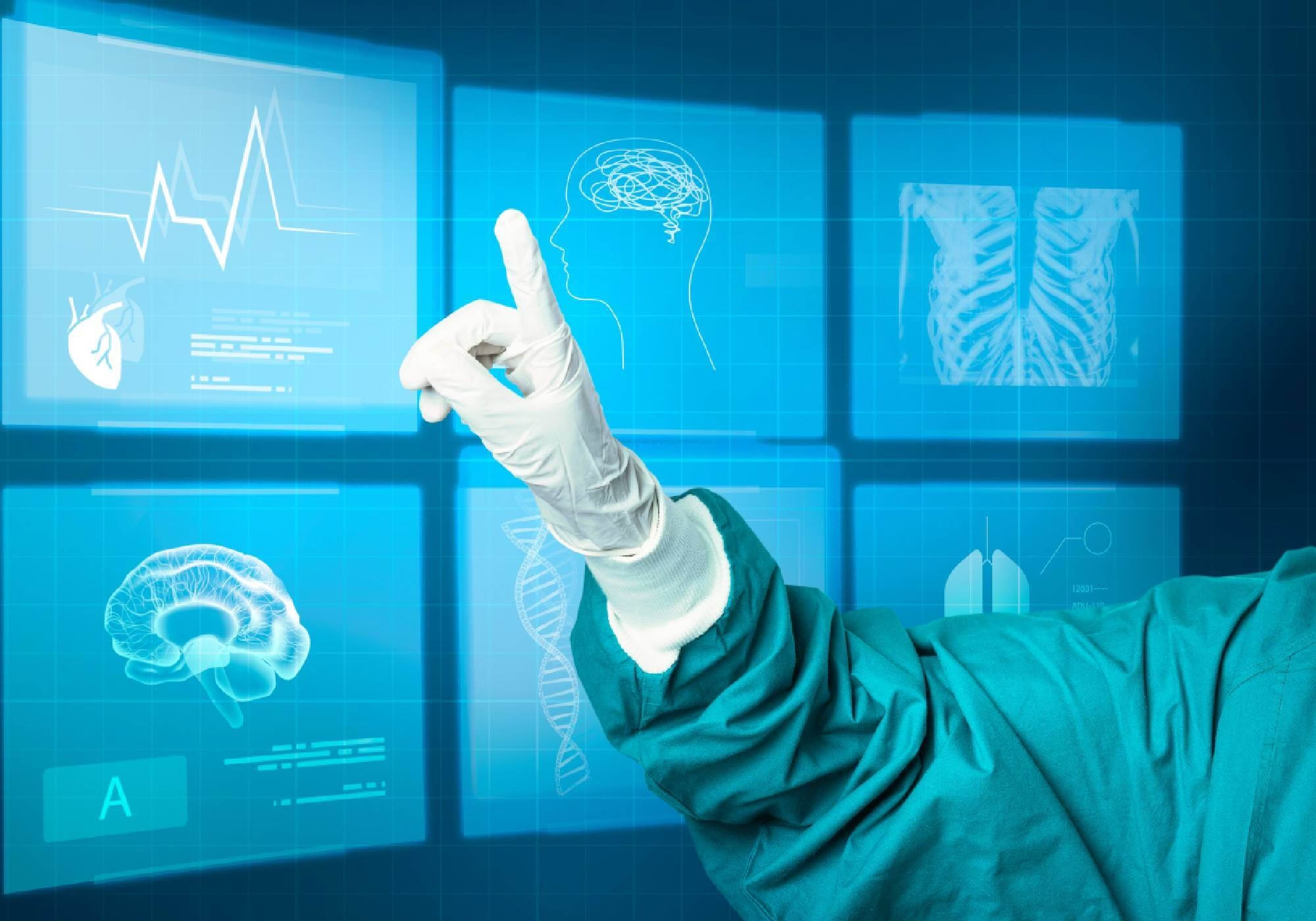
Machine Learning in Healthcare: Disease Detection, Treatments & Drug Discovery
Picture a world where you could recognize medical problems before sickness symptoms appear to your doctor already knowing the illness source. The physician would already have identified the disease based on medical examination. Gene composition determines all treatment options in such a medical environment. The market introduction of life-saving medications would shorten from years to just months. Machine learning provides such capabilities to healthcare applications. Machine learning uses rapid and precise evaluation of extensive data collections. This, in turn, helps the medical practitioners with better choices. The technology reduces expenses while generating better profits yet proves essential for deciding between patient fatality and patient recovery. Research suggests artificial intelligence will conserve healthcare dollars to the amount of 150 billion annually. The research indicates that this advancement will be possible starting from 2026. The importance behind this paradigm transition requires explanation. Historically medical images together with patient histories proved challenging to deal with as healthcare data. Modern ML technology makes possible the advancement of earlier healthcare obstacles. Computers learn to recognize patterns. The combination of predictive capabilities and precise outcomes happens faster through machine learning techniques than possible at any earlier time. Learning about Machine Learning in Healthcare What Is Machine Learning? Artificial intelligence features machine learning as its branch, which allows systems to improve their operations through experience without preset instruction. Humans use data to learn patterns that machines can replicate through the teaching process for decision-making in much the same way. ML systems have the ability to continuously learn and evolve with extra information because they do not function through hardcoded programming rules, thus making them ideal for healthcare settings, which need dynamic processing of abundant data. Why Healthcare? Medical institutions generate significant amounts of information through patient files and imaging reports together with genetic data and patient responses. The vast amount of healthcare data went unused for many years. However complex and overwhelming the data proved to be for human analysis. Machine learning depicts a system that operates efficiently with extensive data volumes. The conversion of raw data into meaningful information through this process supports health improvements. Sepsis causes over 11 million annual fatalities because it signifies a life-threatening medical situation. Medical professionals typically fail to detect sepsis early through conventional sepsis detection methods. Patient data processing through ML algorithms enables sepsis prediction before symptom onset during hours before clinical manifestation. Early detection through this system helps medical staff preserve patients’ lives. How It Works The main categories of machine learning operations in healthcare include: Now, let’s look at some of the types of learning and their work in different fields. Types of Machine Learning in Healthcare Type of Learning How It Works Example Supervised Learning Learns from labeled datasets. Diagnosing cancer using annotated medical images. Unsupervised Learning Identifies hidden patterns in unlabeled data. Clustering patients for personalized treatment plans. Reinforcement Learning Optimizes actions through feedback and rewards. Training surgical robots for improved precision. Machine learning serves both technological advancement and empowerment for healthcare providers as well as patients. ML combines human knowledge with algorithmic intelligence. The healthcare system becomes smarter through this development. The current system demonstrates increased empathy. Finding Diseases Early: Spotting Illnesses Before They Happen The Strength of Predictive Analysis The ability to detect disease risks before experiencing symptoms would be possible through certain knowledge. New information enables you to implement preventive measures. The development of machine learning allows such progress to become achievable. Small disease indicators that may develop in patients can be uncovered by examining their genetic data and behavioral patterns alongside medical records. Regular mammograms fail to detect breast cancer early signs sometimes because they have limited accuracy. DeepMind, under the ownership of Google, delivers cancer detection at a 94.5% accuracy rate, which surpasses human physicians in early disease identification. The improved rates of survival along with the decreased need for avoidable medical tests are a result of this advancement. Filling Holes in Diagnosis The identification of incorrect medical diagnoses signifies a major issue that affects healthcare delivery. The World Health Organization records diagnostic errors as affecting millions of people yearly who later get improper or delayed medical treatments. Medical machines decrease diagnostic errors by offering information-driven secondary consultations. The healthcare system benefits from IBM Watson Health’s utilization of ML to analyze radiology reports. It generates possible diagnostic results, which minimizes the chances of incorrect medical conclusions. This research showed Watson recognized diabetic retinopathy symptoms in 87% of patients before the condition advanced to the blindness-preventing stage. Real-World Applications The application of early detection techniques results in life savings besides healthcare cost reductions. Such detection approaches lower medical expenses and lead to significant cost reductions in healthcare systems. Machine learning advances core diagnostic efforts because of its reinforcing value. Tailored Treatment Customizing Medicine for People Each patient shows different responses to medical treatments. Every individual maintains a unique health status because of genetic components, environmental elements, and personal customs. Through machine learning, healthcare professionals develop unique treatment strategies that match each individual patient. The mechanism studies various differences among patients before matching them to optimal therapy options. Genes decide how medications affect individuals through the analysis known as pharmacogenetics. Through analysis of genetic data, machine learning determines a patient’s reaction possibility to specific medications. This tool helps find both positive and negative drug responses in patients. Foundation Medicine serves as an illustration of how doctors pick cancer treatments by examining tumor genetic information. Changing How We Manage Long-Term Illnesses Patients who have diabetes or hypertension need prolonged medical treatment. The medical application MySugr uses ML algorithms to process diabetes patients’ glucose data and behavioral patterns, which results in individualized healthcare advice. Patients gain health control through these systems, which concurrently lighten healthcare system loads. Real-Time Adaptations The learning process of machine learning continues beyond its first recommendations through a process of adaptation. The Fitbit and Apple Watch collect actual time-based measurements of heart rate alongside physical activity data from their users. The processing of such data through ML algorithms supplies adaptive

Underwater Sound Technology: Advancing Ocean Exploration & Conservation
Imagine a world where people talk to each other in whispers and echoes. Our planet mostly resembles that of deep, mysterious oceans. This underwater world has been known to be explored with difficulty up until now. Sunlight quickly goes down with you into the ocean. The ocean is very deep for most people. There is so much pressure that keeps them from going down. The ocean holds many secrets about our climate and the early ages of life. It also contains a lot more resources. So, how does one access these secrets? Fortunately, sound is the answer. The underwater sound technology helps us hear whatever happens under the water. Of course, sound is not just about hearing. It comprises understanding a mix of sounds; among those are dolphins talking to each other and rumbling the earth below. For a long time, we didn’t have much information about the oceans. We couldn’t look deeply into its depths. We had to live on occasionally fleeting glimpses from underwater vehicles or above-water conjectures. The new sound technology now offers perfectly unhindered and continuous views into this closed world. The following blog post will bring up the latest developments with underwater sound technology, the capabilities it has, and possible future directions. In a way, this technology has changed how we explore and protect our oceans. We will see how these advancements are helping us learn more and take better care of this important ecosystem. The Science of Underwater Sound Technology How Sound Moves in Water The sound waves travel five times the speed through water when compared to their movement in the air. Due to this exceptional property, water allows sound to become the most dependable instrument for underwater study and navigation. Dolphins and whales rely on the same audio principles that have been around for ages. Echolocation is their natural sonar system, which helps both hunting and their interpersonal communication. Recently, people applied this underwater acoustic concept into practical practice. Underwater objects reflect the sonar acoustic pulses that travel five times faster through water as they return as echoes. Scientists interpret these acoustic echoes to find out object measurements and dimensions, and also recognize their materials through such analysis. Ocean mapping as well as shipwreck detection depends strongly on this capability. History of Development Underwater sound technology started as an initiative during the First World War, with navies employing very primitive sonar systems to detect enemy submarines. Over time, these systems have undergone transformations from very basic methods to high-end techniques. For instance, a modern multibeam sonar gives high-quality, high-resolution images of the seafloor. Transformative autonomous underwater vehicles with acoustic sensors included discovery to a large extent and minimal human intervention. One of the most interesting milestones was in 1985 when sonar technology was used to determine the location of the wreck of the RMS Titanic. This event reaffirmed the importance of sonar technology in making known the deep mysteries of the oceans. The shapes of the new progressions demonstrate the capabilities of sound and how technology is always changing. It is taking on the use of sound to discover unknown depths on planet Earth. Important Steps in Underwater Acoustic Technology Clear Sonar Systems Modern underwater detection technology has evolved substantially since starting as military instruments. Sonar technologies with high precision mapping capability include multibeam and side-scan models that deliver the most accurate determination of underwater ground features. Since multibeam sonar sends out multiple sound waves simultaneously, it produces a detailed three-dimensional representation of the ocean floor. Large flat areas achieve better imaging results with the usage of side-scan sonar systems. The technology proves best for detecting both submarines and buried artifacts underwater. Researchers employed high-resolution sonar technology to accomplish their recent studies. Researchers used their equipment to create detailed surveys of the extensive submarine features at the Mariana Trench. Scientists have established this region as the absolute deepest region of the ocean. The amount of information obtained serves both scientific purposes of knowledge acquisition and provides safety measures for submarine operations and vehicle navigation in underwater environments. The advancement allows scientists to replace a blurry black-and-white photo with high-definition images in full color. The present sonar technology supplies enhanced visibility, which enables clearer ocean exploration. Autonomous Underwater Vehicles These unmanned, self-driving vehicles are programmed for missions that are too dangerous or expensive to attempt with human divers. AUVs can plunge deep and carry on their operations of data collection as they return from the seabed with samples. One fine example of such oceanic AUVs is the one used for search and rescue operations with regards to Malaysia Airlines Flight MH370. These vehicles scoured the depths of the Indian Ocean, traversing areas that would otherwise have needed an exorbitant amount of research investment via traditional means. As for the AUVs, they are incredibly beneficial for deep-sea mining and environmental monitoring. With high-quality acoustic data acquisition, these little machines will delineate where minerals-rich areas lie and how their potential impact on the fate of ecosystems will be evaluated. Listening to Ocean Animals The study of marine systems heavily depends on the utilization of acoustic monitoring technology. Marine researchers use underwater microphones named hydrophones for hearing the sounds produced by marine creatures, including whale songs and fish calls. The collected underwater recordings enable scientists to acquire crucial data about animal activities together with population development and their migratory movements. The Pacific Ocean humpback whale population monitoring has relied on acoustic data collection for mapping its migration patterns. The gathered information enables the creation of protective measures, including designated safe areas, which prevent boat accidents. Research conducted with acoustic techniques has uncovered concerning evidence regarding the decreases in fish species populations because of overfishing. The technique serves as underwater sensory equipment for oceans, which gives researchers the ability to observe marine ecosystems for developing conservation strategies. Uses in Ocean Research Mapping the Deep Sea The ocean floor mapping essentially understands the geology of the Earth and aids marine industries. It has a very important aspect,

Sustainable Packaging Materials: Science for a Cleaner Future
The very idea of “sustainable packaging material” can’t be termed as a niche anymore; it has become a necessity. The earth is in the clutches of a continuous waste crisis. Conventional packaging aggravates this difficulty. Luckily, science has come into play. Innovative sustainable packaging materials are being created with a view to a cleaner and healthier future. I remember when “eco-friendly” packaging meant limited options; now the options seem to be endless. This article explores how science transforms this field. 1. Introduction Every year nations across the globe generate more than 300 million tons of plastic production yet recycle less than 9% of this total. This shocking figure demonstrates ever-increasing difficulties with waste management and environmental pollution linked to traditional packaging materials. With landfills overflowing and oceans choking under heaps of plastic debris, the questions surrounding sustainable solutions become ever more deafening. To meet such a challenge, science has initiated innovations in sustainable packaging materials. Such innovations reduce not only the waste, but also the environmentally harmful effects stemming from the very existence of packaging. Ranging from biodegradable plastics to films derived from plants, science is here to transform packaging and conservation of goods. With this kind of revolution, we are looking toward a cleaner and greener future for generations to come. Industries are making significant efforts to tackle imminent issues facing the environment. In doing so, they use different materials and methods. The science-driven transformation toward Sustainable Packaging Solutions heralds a future where packaging never compromises the health of our planet. 2.The Issues with Regular Packaging 2.1 How Traditional Packaging Affects the Environment Conventional packaging, primarily plastics, has become a major environmental threat. Plastics make up almost 12% of the global solid waste. They resist decomposition and thus stay in the ecosystem for a hundred years. This persistence blocks landfills and kills wildlife and aquatic life when dumped. Take, for example, a single-use plastic bag: its breakdown may take anywhere between 100 and 500 years. During its degradation, microplastics are released into the environment, which contaminates food chains and then influences biodiversity. As reported by the United Nations, 100,000 animals in the ocean die each year as a result of plastic entanglement or ingestion. These horrendous statistics stress the urgency for action. Material Decomposition Time Recyclability Rate Plastic Bottles 450 years 30% Aluminum Cans 80–100 years 75% Paper 2–6 weeks 68% Biodegradable Plastics 3–6 months 100% The table above captures in stark relief that the effect of traditional plastics is staggering in comparison to that of different materials. 2.2 Why Current Recycling Methods Don’t Work Well Recycling systems are confronted by severe barriers that halt their effectiveness. One of the major obstacles relates to the sorting and processing of mixed materials. Multi-layer packaging, for instance, is widely used to package snacks and frozen foods. It combines plastics and aluminum, which makes it effectively an impossible task to recycle. Most areas lack the necessary recycling equipment to support large-scale recycling processes. Less funding is available for waste management systems within developing countries. They are poorly equipped. The accumulation of plastics occurs when they get trapped in both landfill spaces and waterways. Instantly after proper waste sorting in developed nations, the resulting materials become contaminated by improperly sorted waste. The contamination produces detrimental effects on their quality. It thus limits reuse potential. Consumer behavior further complicates the issue. A great number of people do not know about the recycling process or find it inconvenient. This leads to many recyclable materials actually going to waste. These shortcomings can be corrected only through a joint effort by governments, industries, and consumers. This will help set up solid systems for sustainable waste management that can meet rising demand. 3.Science to Help: New Ideas in Eco-Friendly Packaging 3.1 Materials That Break Down Naturally The packaging sector has undergone a revolutionary change because of biodegradable materials. Nature utilizes these materials through applications that produce no hazardous substances. PLA stands for a mainstream biodegradable material made from renewable cornstarch and other starch-based substances. An inspiring example is Dell Packaging. Wheat straw is used to package laptops. This biodegradable material prevents millions of pounds of plastic waste annually. It demonstrates how industries can choose the less traveled route for waste minimization. In another exciting project, seaweed films are being created. Companies like Notpla have produced packaging that is both biodegradable and edible. This dissolves completely in water, thus providing a possible, eco-friendly choice to single-use plastic packaging. 3.2 Plastics Made from Plants The sustainable choice to petroleum-based plastics exists through plant-based bioplastics that show improved environmental prospects. Products made from renewable materials, including cornstarch, cassava, and sugarcane, produce lower environmental emissions from their whole existence. The Plant Bottle produced by Coca-Cola uses parts derived from renewable plant materials, reaching a plant-based content of 30%. This saves almost 20% of the carbon footprint of the bottle on account of using less conventional plastic. This makes it possible to say that over 10 years, Coca-Cola produced billions of Plant Bottles and, hence, saved millions of tons of CO2 emissions. However, these bioplastics do come with disadvantages. These often need specific composting conditions to break down effectively, so limiting their decomposition action in standard landfills. Nevertheless, the advantage of these bioplastics reducing fossil fuels makes them an important piece of a sustainable packaging strategy. 3.3 Packaging You Can Eat: A New Idea Manufacturers should develop packages which consumers eat together with their nourishment. The environmental consciousness of customers is boosting the popularity of edible packaging as a technology that remains under development to solve excessive packaging waste. Startups like Notpla are at the forefront of this emerging field. They manufacture edible pouches and wraps from natural materials such as seaweed. The market leadership belongs to Oohos through their product role. The water pods exist as biodegradable film products derived from seaweed. The product serves as a sustainable water container that substitutes standard single-use plastic bottles. Competing marathons use Oohos as their preferred beverage unit. The product delivers hydration through entertaining