

Transform your arid yard into a thriving oasis with desert biome flora! Learn sustainable gardening tips, from native plants like saguaro to water-efficient xeriscaping, and create an eco-friendly garden that supports biodiversity. Start today!
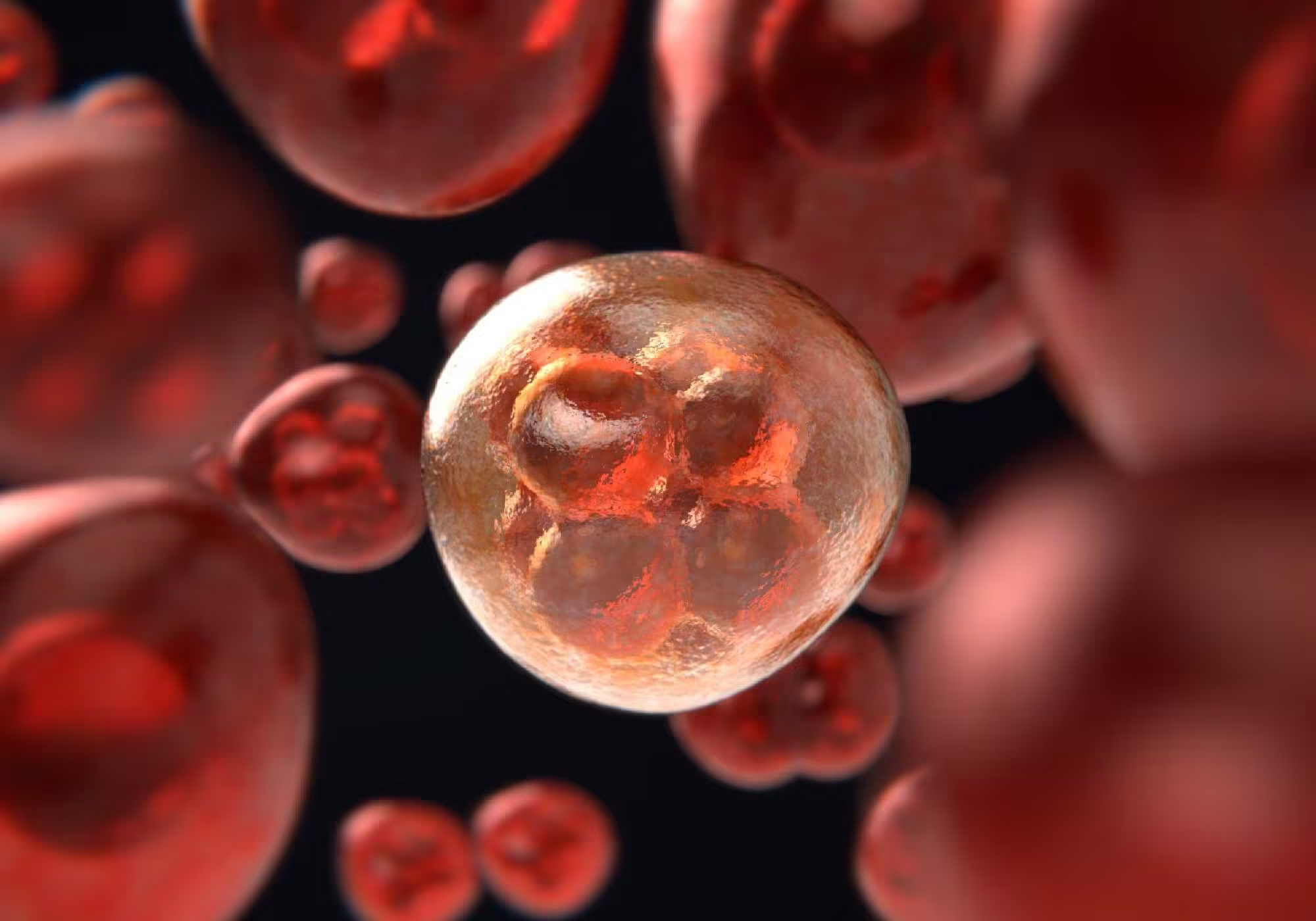
Stages of Mitosis and Meiosis in Human Cells
Cell division is one of the most interesting and fundamental processes that occur in the human body. It allows us to grow, recover, and even pass on our genetic material to future generations. Today, we will learn about the two major types of cell division in humans: mitosis and meiosis. Whether you’re curious about how your body repairs itself or how life is created, understanding these processes gives you insight into how our cells work. Cell Division Cell division occurs in two forms, mitosis and meiosis, and each has its own unique role. Mitosis helps in growth, tissue repair, and asexual reproduction by producing two identical daughter cells. Meiosis, on the other hand, is responsible for sexual reproduction, creating genetically diverse gametes (sperm and eggs). While mitosis produces two identical cells, meiosis generates four non-identical cells, each with half the number of chromosomes needed for genetic diversity. Stages of Mitosis 1. Interphase Before mitosis begins, the cell must get ready. During interphase, the cell goes through three main stages: G1 (growth), S (DNA synthesis), and G2 (preparation). In this phase, the DNA is replicated, and the cell grows larger, making sure everything is in place for division. 2. Prophase During prophase, the DNA, which is normally loosely packed, condenses into visible chromosomes. Each chromosome consists of two sister chromatids held together at a point called the centromere. The nuclear membrane dissolves, and spindle fibers form, which will guide the chromosomes during division. 3. Metaphase In metaphase, the chromosomes move toward the center of the cell. They line up along the metaphase plate, and spindle fibers from opposite sides of the cell attach to each centromere. This ensures that each new cell will receive one copy of each chromosome. 4. Anaphase Now, in anaphase, the sister chromatids are pulled apart by spindle fibers to opposite sides of the cell. The chromatids, now separate chromosomes, move away from each other, ensuring that each new cell will have the correct number of chromosomes. 5. Telophase During telophase, the chromosomes reach opposite ends of the cell, and new nuclear membranes form around each set of chromosomes. The chromosomes begin to unwind back into their string like form, preparing the cell for its final stage. 6. Cytokinesis Finally, cytokinesis divides the cytoplasm and cell membrane, creating two identical daughter cells. These cells are exact copies of the parent cell and can now enter interphase, continuing the life cycle. Stages of Meiosis Mitosis is meant to produce identical cells for growth and repair, while meiosis has a different goal: to produce cells for sexual reproduction. This process occurs in two stages of division: meiosis I and meiosis II, and results in four genetically unique cells. Meiosis I: Meiosis II: Comparison of Mitosis and Meiosis Although mitosis and meiosis have some similarities, they serve very different purposes. Mitosis involves creating two identical cells to help the body grow and repair itself, while meiosis creates four genetically different cells for reproduction. Mitosis results in two daughter cells, each with a full set of chromosomes, while meiosis creates four gametes, each with half the number of chromosomes. Conclusion Mitosis and meiosis are the unknown heroes of life, helping our bodies to grow, recover and create new life. From the daily repair of your cells to the incredible genetic diversity created during reproduction, these processes are at the heart of human biology.
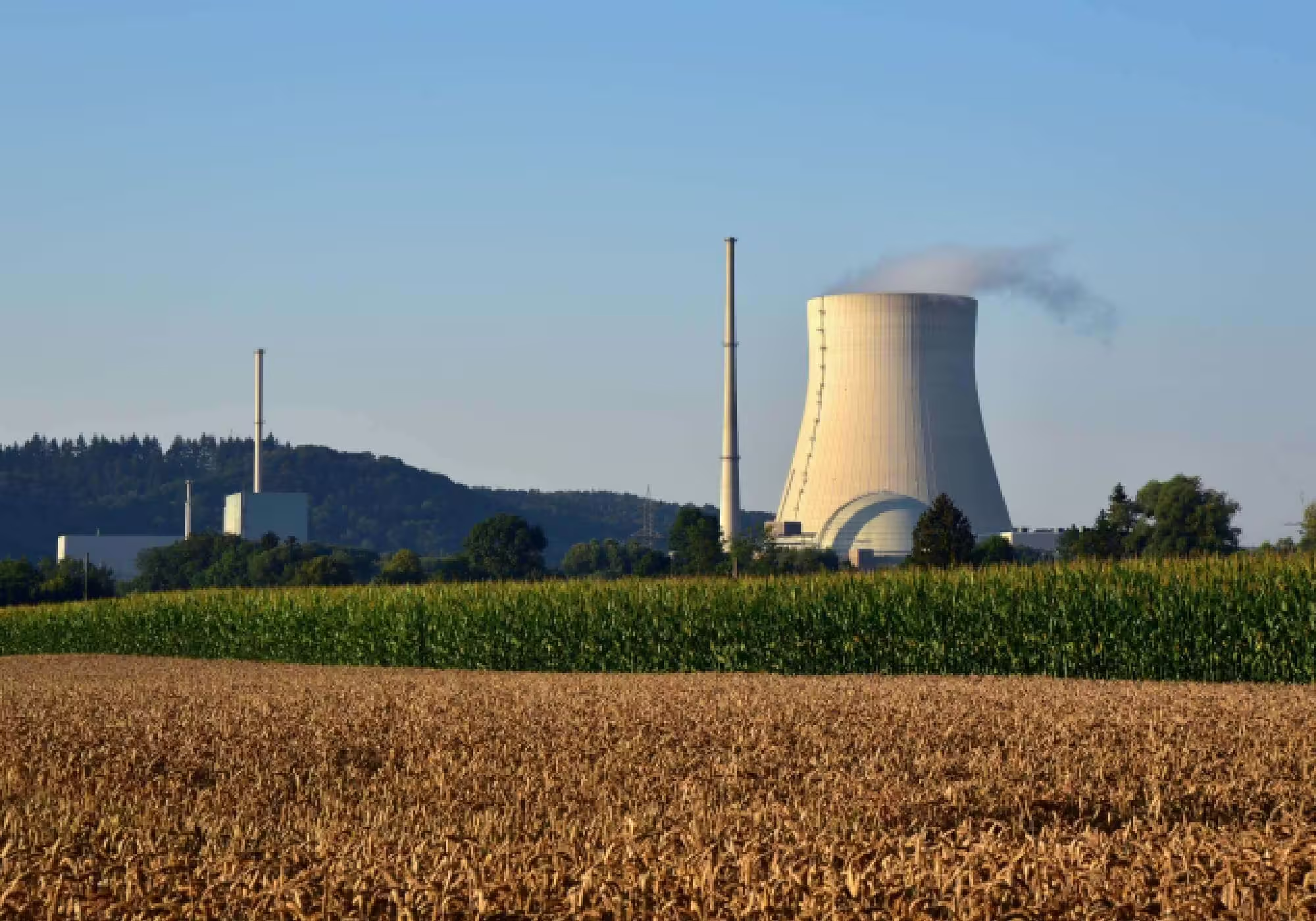
Nano Nuclear Energy Stocks in the Green Energy Revolution
Many people are looking for the next big breakthrough in clean energy. Nanonuclear energy, is a technology that is gaining attention due to its ability to revolutionize the power generation. But beyond the technology, there’s an emerging market that investors are keeping an eye on, and that is nanonuclear energy stocks. What makes these stocks attractive, and how might they fit into the future of green energy? Allow me to explain why this is a good idea. Before I talk about into their potential, I want to clarify what we mean by nanonuclear energy stocks. These stocks represent companies focused on small modular reactors (SMRs) and other nanoscale nuclear technologies. Unlike traditional nuclear power, SMRs are designed to be able to produce energy in a safer, more efficient, and more flexible way. The demand for clean energy is increasing rapidly, so these innovative technologies could be the perfect solution. Why Nano Nuclear Energy? As countries try to cut carbon emissions and invest in renewable energy resources, the limitations of wind and solar power are more and more limited. They are essential, but they lack reliability, especially when demand increases. That is where nanonuclear technology comes in. Nano reactors, much smaller than traditional nuclear reactors, and promises safer and more efficient energy production. Their smaller counterparts are easier to set up, take up less room, and can power smaller power grids or even individual communities. For investors, the question is not just about the technology, but about the market opportunities it presents. Nanonuclear energy stocks could become hidden gems in the broader clean energy market. Performance of Nano Nuclear Energy Stocks The stock market, especially in the energy sector, is notoriously unpredictable. However, some factors indicate strong future performance of nanonuclear energy stocks: 1. Sustainable Energy Production The most important advantage of nano nuclear energy is its ability to provide continuous power with minimal carbon emissions. Unlike solar or wind energy, which are heavily dependent on weather conditions, nuclear energy is reliable. Nano reactors can operate for a long time, without needing to be refueled. 2. Increasing government support Many countries are actively providing grants and subsidies for nuclear research, particularly for smaller and safer reactor designs, countries like the United States and Canada. The US has invested heavily in advanced nuclear technologies, including small modular reactors (SMRs), through government agencies like the Department of Energy. Similarly, Canada is promoting the development of SMRs as part of its clean energy strategy with federal funding and support for research and development in this area. 3. Growing demand for stable energy While renewable energy sources like wind and solar fluctuate depending on the weather, nuclear power provides a steady, continuous supply. Investors betting on energy stability could look to nanonuclear as a reliable alternative. 4. Global expansion potential Countries with unstable grids, particularly in developing regions, may find nano reactors attractive. This global demand could boost stock values, making nanonuclear energy stocks worth holding over the long term. Important Factors in Nano Nuclear Energy Stocks You are probably wondering which companies are leading the way in this new field. Although there are many smaller companies, here are a few names that are making the rounds: It’s important to keep a close eye on these companies. Their stock performance can be affected by technological breakthroughs, government contracts, or even environmental disasters. Market Trends and Investor Interest Green energy may be the future, but not all green technologies are the same. Nano nuclear energy stocks offer a unique value perspective that could make them stand out from other clean energy investments. Here’s why they’re attracting attention: How to Invest in Nano Nuclear Energy Stocks Are you interested in getting into this market? Here’s a quick list of steps to get started: Final Thoughts Investing in nanonuclear energy stocks is the first step in a big change in the way we power the world. While traditional renewables are also essential, they can’t do it alone. Nanonuclear energy offers the stability and scalability that wind and solar power can’t, making it an essential part of the green energy revolution. For investors, the next couple of years could be crucial in determining which technologies emerge as the leaders in the race for sustainable electricity.
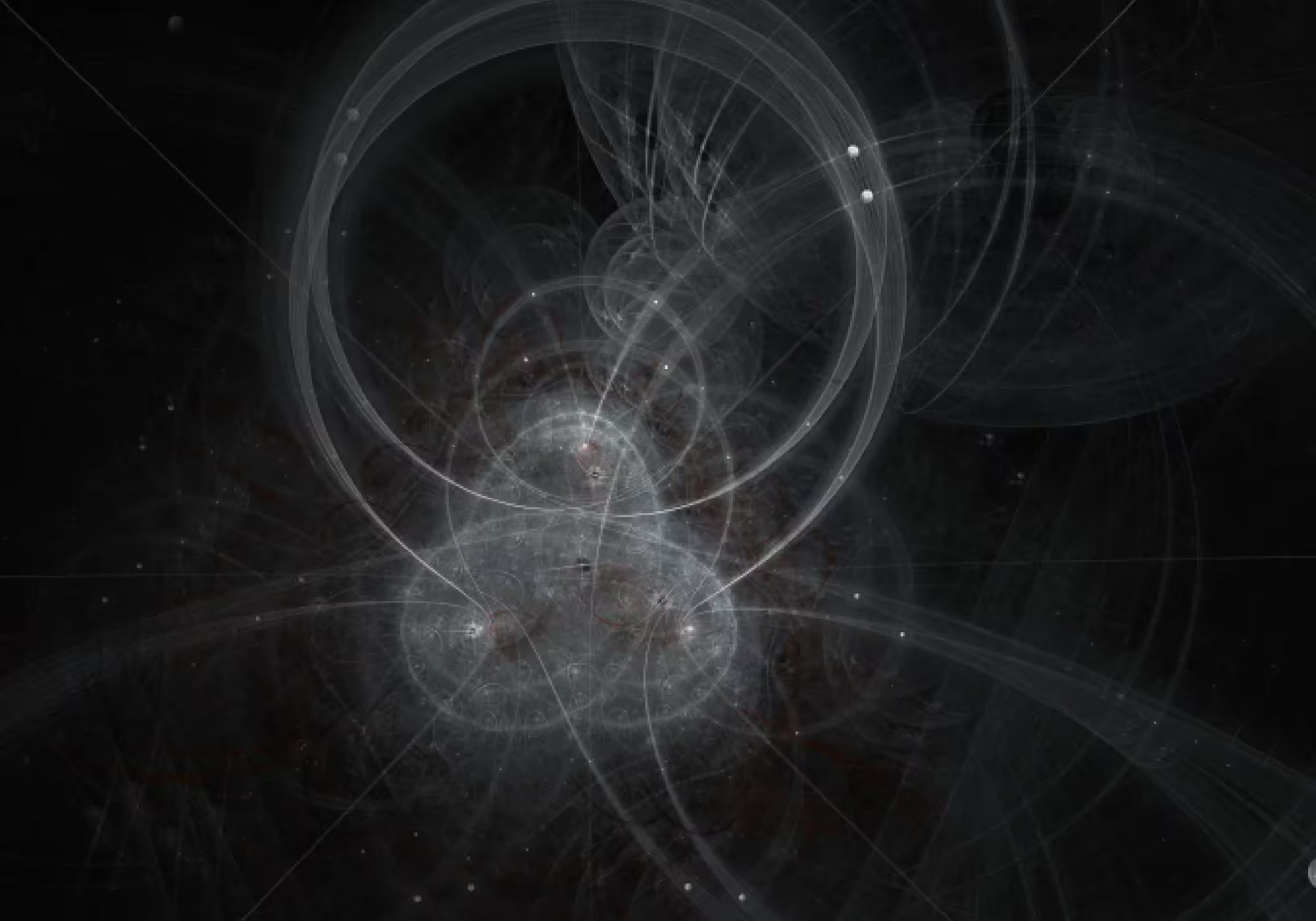
Invisible String Theory in Modern Physics
Invisible string theory suggests that invisible strings connect particles, influencing their behavior and bridging gaps in existing physics theories. It aims to unify the four fundamental forces, enhance understanding of quantum mechanics, and explain phenomena like dark matter and gravity. This groundbreaking concept could reshape our comprehension of the universe significantly.