

CO2 emissions have been largely industrial in nature. The industry has been trying to reduce carbon emissions over the past several years. This change is a result of growing awareness towards the environment. Increasing regulations have also influenced the efforts. Among the most promising solutions, carbon capture and sequestration technology has been one of the most important solutions. Today we will discuss how CCS will shape the future of industrial chemistry. It will focus on reducing emissions and helping industries adopt cleaner practices. Carbon Capture in Industry Cement, steel and chemical industries are some of the industries that emit high amounts of carbon dioxide into the atmosphere. The emissions harm the environment. They also violate climate change agreements. These agreements are becoming increasingly stringent across the world. Carbon capture and sequestration technology is the solution. By capturing CO2 emissions before they reach the atmosphere, industries can substantially reduce their impact on climate change. The captured carbon can be reused for other industrial processes. It can also be stored safely underground. This prevents it from contributing to global warming. We need effective solutions like CCS. Without them, meeting the international climate goals set out in the Paris Agreement will be nearly impossible. As Bill Gates once said, “We need innovation, not just in how we produce energy, but in how we capture carbon.” This statement underscores the need for carbon capture technologies for industries to stay sustainable while maintaining growth. How Does Carbon Capture Technology Work? The basic idea behind CCS is simple. Capture CO2 emissions from industrial processes. Either reuse them or store them away from the atmosphere. Nevertheless, the actual technology involves various processes, each suited for different industries. 1. Pre-combustion capture: This technology removes the carbon in the fuel before combustion. Businesses that rely heavily on coal or natural gas can profit. They do so by converting the fuel into a mixture of hydrogen and CO2. The CO2 is then separated and captured, while the hydrogen is burned for energy. 2. Post-combustion capture: CO2 is captured from flue gases after the fuel is burned. This is the most common post combustion carbon capture method. It is mainly used in power and heavy industries. With chemical solvents, it becomes possible to trap CO2, preventing its emission into the air. 3. Oxy-fuel combustion capture: This method burns fuel in oxygen rather than air, producing flue gas that is almost entirely water vapor and CO2. The water is removed by cooling the flue gas. All that remains is to capture the CO2. Each method has advantages for different industries. They are constantly improved to increase their efficiency. This ensures that CCS can be used on a larger scale around the world. Benefits of CCS for Industrial Applications CCS offers several immediate benefits, making it attractive for industries: CCS not only helps the environment, but also provides opportunities for industries to enhance their processes and boost economic performance. Challenges of Carbon Capture Technology Despite its clear advantages, CCS faces a few obstacles that slow its adoption. 1. High Costs Installing carbon capture technology requires a significant investment upfront. The cost of setting up the capture, transportation, and storage infrastructure can discourage industries, especially smaller companies. 2. Energy Consumption Capturing and compressing CO2 requires considerable energy. In some cases, the extra energy use outweighs the environmental benefits. As a result, this poses a challenge for companies seeking net-zero operations. 3. Storage and Transport Once CO2 is captured, it has to be transported to secure storage sites. These storage sites are often far from industrial centers, requiring significant infrastructure. Industries must also make sure that the CO2 remains safely underground, which adds costs and complexities. The Future of Carbon Capture in Industrial Chemistry Looking into the future, carbon capture technology will play a key role in reducing industrial emissions. Scientists are constantly refining CCS techniques, making them more energy efficient and less expensive. Direct air capture technology, which removes CO2 directly from the atmosphere, is particularly promising for future use. Additionally, governments and environmental organizations are increasingly supporting carbon capture projects by offering financial incentives. These efforts guarantee that CCS becomes an integral part of the industrial landscape. They help to reduce emissions on a large scale. Soon, more industries will rely on CCS to meet both legal requirements and consumer demand for greener products. Conclusion Carbon capture and sequestration technology is changing the way industries approach environmental responsibility. By capturing CO2 emissions before they reach the atmosphere, industries can reduce their environmental footprint while maintaining economic growth. As the technology develops, it will become an essential tool in tackling climate change. Industries that adopt CCS now will gain a competitive edge in a rapidly changing marketplace. As CCS becomes more affordable, it will be implemented across many sectors. This will drive progress toward a cleaner, more sustainable future. References
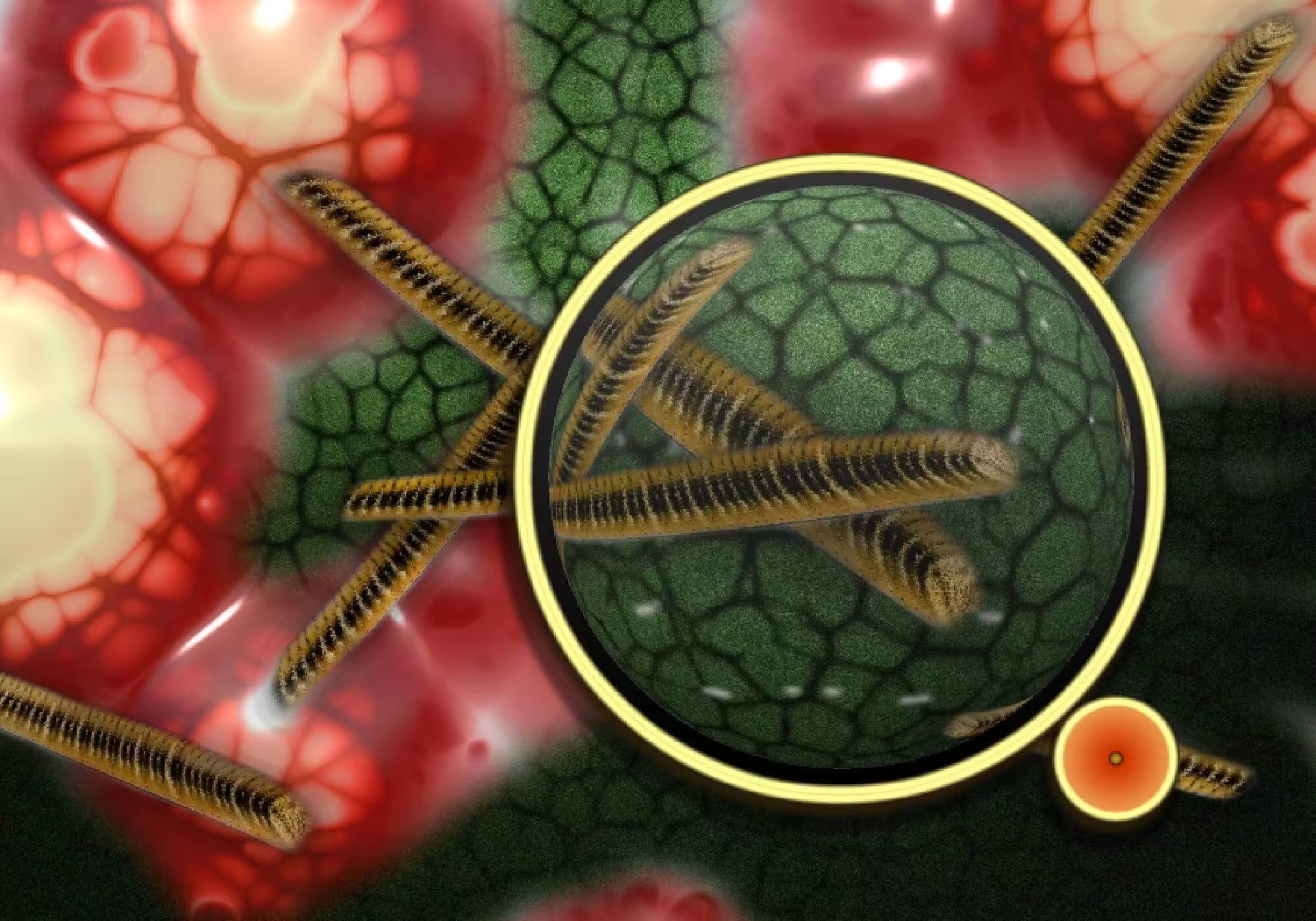
Antibiotic Resistant Bacteria: A Growing Threat
Antibiotic resistant bacteria are a significant challenge to our health. Such bacteria have learned to survive treatments that used to kill them. They have learned to survive. This situation has made many infections harder to cure than a few decades ago. Over the years, humans have used antibiotics extensively. This use has made bacteria struggle and grow stronger. This problem now threatens millions of people around the world, and we must take steps now to stop it. What is Antibiotic Resistance? Antibiotic resistance occurs when bacteria change in such a way that the medicine used to treat them becomes less effective. Normally, antibiotics fight bacteria by stopping their growth or killing them. But some bacteria get smarter and find ways to evade treatment. This makes infections that were in the past easy to treat last longer or get worse. Resistance of Bacteria Bacteria become resistant mainly through changes in their genes. When antibiotics are used, some bacteria with genetic changes can survive. These bacteria then multiply, and the resistance spreads. They can even pass this resistance to other bacteria, making the concern bigger. Using antibiotics too much or in the wrong way speeds this process up. When people take antibiotics for viruses, like colds or the flu, bacteria get a chance to survive. Not finishing prescribed doses also helps bacteria grow stronger. This makes future infections harder to treat. Effects on Health and Society The rise of antibiotic resistant bacteria affects everyone. With fewer treatment options available, infections last longer, become more severe, and cost more to treat. More patients with resistant infections are arriving in hospitals, overcrowding the healthcare system and increasing medical costs. The World Health Organization (WHO) warns that antibiotic resistance cause 10 million deaths per year by 2050. This threat is real if no action is taken. In fact, treating infections caused by resistant bacteria can cost 20 times more than treating nonresistant strains. Here we look at a brief comparison to understand the rising costs: Infection Type Cost of Treatment (Non-resistant) Cost of Treatment (Resistant) Urinary Tract Infection (UTI) $100 — $200 $1,500 — $5,000 MRSA (Methicillin-resistant Staph) $3,000 — $5,000 $30,000 — $50,000 Tuberculosis (TB) $500 — $1,000 $10,000 — $20,000 Notable Antibiotic Resistant Bacteria Some bacteria have become particularly harmful because of their resistance: How Can We Fight Antibiotic Resistance? We can slow the spread of antibiotic resistance by taking the proper steps: Future Hope and Ongoing Research Scientists are looking for new ways to fight bacteria. Some are studying viruses called bacteriophages that attack bacteria. Others are working on special compounds called antimicrobial peptides. These new ideas look promising, but we need more research before they can be widely used. Groups like Centers for Disease Control and Prevention (CDC) are raising awareness of antibiotic resistance. The WHO is also promoting smart antibiotic use. “Without effective antibiotics, modern medicine will fall apart.” — Dr. Margaret Chan, Former WHO Director-General Conclusion Antibiotic resistant bacteria are a growing threat to everyone. The misuse of antibiotics has made this problem even worse. We can slow the growth of these dangerous bacteria by using antibiotics wisely. Better research will also help in saving lives. References

How Linear Particle Accelerators Power Breakthroughs in Science and Medicine
Particle accelerators are no longer just tools for purely theoretical research. Today, a linear particle accelerators play an important role in changing our tomorrow, from curing cancer patients to explaining all the mysteries of our universe. These machines change fields of science, medicine, and even industrial sectors. So, how do they do this? Let’s take a look at how the linear particle accelerator is driving progress in these areas. What are Linear Particle Accelerators? Linear particle accelerators, or LINACs, accelerate particles such as protons or electrons using electric fields. These charged particles move in a straight line, gaining energy as they pass through a series of electrodes. Compared to circular accelerators, which move particles in a loop, linear accelerators move them straight toward a target. Their applications go far beyond basic particle physics experiments. LINACs have a vital role in medicine, research, and even in nondestructive testing of various industries. They offer unmatched precision, which makes them an essential tool for modern technology and healthcare. Medical Breakthroughs with Linear Particle Accelerators One of the major new applications that came soon after the invention of the linear particle accelerators was in radiation therapy for cancer. It is important to note that LINACs deliver highly localized radiation, which is important in killing the tumor cell while minimizing damage to nearby healthy tissue. This ensures that patients experience fewer side effects and recover more quickly. Radiation Therapy Doctors use LINAC to mold radiation beams into a shape that can match the size and shape of the tumor. This has proven to be an extremely precise method of treatment, allowing vital organs and structures to be removed and complications to be avoided altogether. Radiation therapy based on LINAC technology has given millions of cancer patients a fighting chance. In most cases, tumors that were considered incurable until recently are now more safely treatable. Scientific Breakthroughs Powered by Linear Accelerators Particle accelerators are valuable tools in scientific research. For decades, they have helped scientists make significant discoveries in the field of particle physics. These machines allow researchers to study the smallest building blocks of matter by colliding particles together at incredibly high speeds. Revealing the Mysteries of the Universe In physics, linear accelerators are often used to study the properties of subatomic particles. The high-energy collisions produced by LINAC make it possible for scientists to learn about matter at its most basic level. This research has not only helped us understand the universe more deeply, but some discoveries have led to some technological innovations in other fields. “The pursuit of scientific discovery is like the pursuit of truth. Both require precision, dedication, and the willingness to push the boundaries of what we know.” — Stephen Hawking High-energy particle accelerators are one of the most fundamental tools in materials science. They help scientists to look into the atomic structure of substances and, through LINAC, lead to stronger metals, better semiconductors, and more efficient energy solutions. Industrial Applications of Linear Particle Accelerators Apart from their applications in laboratories, linear accelerators are also creating waves in industrial sectors. Beams of these devices inspect materials without causing any form of destruction; therefore, such devices play a very key role in nondestructive testing. Such technique is highly valuable for quality control in manufacturing industries, especially in aerospace and automotive sectors. Nondestructive Testing for Safer Materials Using these LINACs, industries can identify defects or weaknesses in materials before using them in the system. This process makes airplanes, cars, and even bridge safer. It is also used in the semiconductor industry by giving higher precision to the manufacturing techniques during the production of microchips. Importance of Linear Particle Accelerators in the Future As technology becomes more advanced, the potential of linear particle accelerators continues to grow. Current research is focused on increasing their energy efficiency and expanding their applications. LINACs may soon play a major role in clean energy development, offering new ways to generate electricity or store energy. Leading Institutions in Accelerator Research Many top research institutes are pushing the boundaries of the capabilities of particle accelerators. Some leading institutes in this field are: These institutions are leading the way in accelerator research and are contributing to medical and scientific progress. Conclusion Linear particle accelerators technology have become the source of power behind some of the most exciting innovations in our world today, from precision cancer treatments to decoding the code of the universe. As research on LINACs continues and improvements made by engineers, these machines are playing a bigger role in shaping the future of science and medicine.

Explaining the Power of UV-Vis Spectroscopy in Physical Chemistry
In physical chemistry, precision is essential for discovery. One of the most effective tools for discovering chemical properties is ultraviolet and visible (UV-Vis) spectroscopy. This method not only breaks down molecular structures, but it also studies reactions as they occur. As a result of its flexibility and precision, UV-Vis spectroscopy plays an important role in both research and industry. UV-Vis spectroscopy works by measuring how a solution absorbs or transmits light in the ultraviolet and visible ranges. By carefully analyzing how light interacts with molecules, scientists can determine the composition and concentrations of a sample. Importance of UV-Vis Spectroscopy in Physical Chemistry In physical chemistry, UV-Vis spectroscopy helps researchers to understand molecular behavior and track reaction rates. It provides essential data to chemists, engineers, and environmental scientists. Absorption and transmittance are the two basic principles of UV-Vis spectroscopy. When a sample passes through a light source, many wavelengths are absorbed while others are allowed to pass through. Based on the absorbed wavelengths, scientists can determine chemical properties and concentrations. Applications of UV-Vis Spectroscopy 1. Quantitative Analysis UV-Vis spectroscopy is widely used for quantitative analysis. Researchers use the Beer-Lambert law to relate absorbance to concentration. This method allows concentrations to be accurately determined during experiments. This is essential for controlling variables in drug assays and chemical reactions. 2. Qualitative Analysis UV-Vis spectroscopy can also be used in qualitative analysis. Because each compound has a different absorption pattern, it is possible to identify unknown substances. The absorption of functional groups offers insight into molecular structure, chromospheres, and possible auxochromes. 3. Structural Characterization In the study of chromospheres and conjugated systems, UV-Vis spectroscopy is invaluable. By examining electronic transitions, scientists can figure out structural details, such as bonding and electron configuration. 4. Kinetic Studies For kinetic studies, UV-Vis spectroscopy helps measure reaction rates. By looking at the change in absorbance over time, researchers can calculate how quickly the reaction occurs. This technique is important for understanding reaction mechanisms. 5. Environmental Analysis UV-Vis spectroscopy can also be applied beyond the laboratory to environmental analysis. It can detect changes in water quality by monitoring pollutants and contaminants. It is also useful in controlling air pollution and food safety, identifying harmful chemicals in the environment. Techniques and Instrumentation UV-Vis Spectrophotometers There are two types of spectrophotometers, single-ray and double-ray. The single ray reads the sample directly. The double ray compares the sample to a reference for lesser delicacy. Both have three main corridors a source of light, a monochromator that filters the light at each wavelength, and a sensor that measures the absorbed or transmitted light. Sample Preparation Accurate results depend on proper sample preparation. The solution must be prepared precisely, and choosing the right cell is essential because path length affects the interaction of light. Data Analysis Once the data is collected, scientists move on to spectral interpretation. From the absorption peaks, chemical components can be separated. Quantitative calculations help determine the properties and concentrations of the sample. Importance of Wavelength in Spectroscopy Hence, the correct choice of wavelength is important in UV-Vis spectroscopy. A compound absorbs light at certain wavelengths. Thus, a suitable wavelength will provide accurate data. Such a choice will determine the clarity and accuracy of the results. Samples absorb certain wavelengths of light when exposed. This is impacted by the molecular structure of the sample. The absorbed energy will reflect clear information about the concentration and composition of the sample. In quantitative analysis, the wavelength with maximum absorption is preferable in terms of increased sensitivity and accuracy. Otherwise, there will be inaccuracies if the wrong wavelength is selected. Another feature is how responses vary with wavelength. Shorter UV wavelengths excite electrons in small molecules, while longer visible wavelengths penetrate deeply into larger conjugated systems. In an experiment, through proper wavelength selection, the chemical behavior will closely reflect the actual conditions, analyzing both qualitatively and quantitatively. Advantages and Limitations A. Advantages and Limitations UV-Vis spectroscopy offers many benefits: B. Limitations However, the technique has some drawbacks: Conclusion UV-Vis spectroscopy remains a cornerstone in physical chemistry. Its ability to precisely analyze molecular structures and reaction rates makes it indispensable for scientists in many fields. From research to industry, this technique provides an efficient and cost-effective way to explore the chemical world. References