

Transformers are revolutionizing AI-powered computer vision, surpassing CNNs in image recognition, medical diagnostics, and autonomous systems. Vision Transformers (ViTs) analyze entire images holistically, improving accuracy and adaptability. As deep-learning advances, could transformers replace CNNs entirely? Explore the future of AI-driven vision!
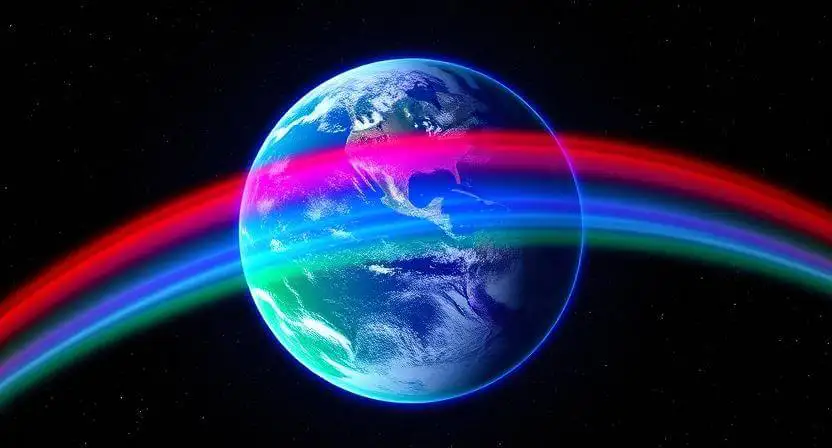
Atmospheric Layers Contributing to Weather Patterns and Climate Change
Understanding the intricate dynamics of our daily weather and rapidly changing climate systems of the earth is crucial. Earth’s atmosphere is an invisible shield of gases that sustain life and shapes the weather we experience every day. From the troposphere, where rain and storms are formed, to the thin exosphere, where satellites orbit, the atmospheric layers influences weather patterns and plays a crucial role in protecting us from the harshness of space. For example, in the mesosphere, temperature can drop to as low as -100°C, while in the thermosphere, they can soar to as high as 1000°C. These dramatic changes affect everything from cloud formation to dazzling auroras. In this comprehensive guide, we will explore the intricate structure of Earth’s atmospheric layers and uncover how these layers influence weather patterns. We’ll also examine how human activities, like pollution and ozone depletion, affect these layers and, as a result, our climate. Emphasizing the importance of the atmosphere, Dr. Jane Lubchenco says that; The atmosphere is our planet’s life-support system, controlling climate and weather that impact every living thing. The Layers of the Atmosphere When we dive into the layers of Earth’s atmosphere, it really helps us see why our weather acts the way it does. Let’s take a look at the different layers. Each one has its own quirks and features, and they all play a role in shaping the weather patterns we experience. So, buckle up as we explore these layers and uncover what makes our weather tick! 1. Troposphere So, let’s talk about the troposphere. You know, it’s often called the weather layer of the atmosphere. This part, hovering about 8 to 15 kilometers above our heads, is pretty fascinating because that’s where temperatures actually drop as you go higher up. It’s in this lively zone that clouds pop up, rain pours down, and storms stir things up. Think about it: every bit of weather we experience, whether it’s just a light sprinkle or a raging thunderstorm—comes from this intricate dance of heat, moisture, and pressure happening in the troposphere. Take the way the Earth’s surface heats unevenly, for example. It creates areas of high and low pressure, which then leads to wind patterns and clouds forming. Check out the interactive diagrams here. They really bring these processes to life with bright icons showing clouds, rain, and storm systems. It’s a cool way to see how these tropospheric weather effects play a role in our daily lives. 2. Stratosphere If we take a look above the troposphere, we find this fascinating layer called the stratosphere, which sits anywhere from about 15 to 50 kilometers up in the sky. It’s pretty crucial because it’s home to the ozone layer. You know, that layer that does a fantastic job of soaking up a lot of the Sun’s nasty ultraviolet rays? It’s like a shield, offering essential protection to all living things down here on Earth. The stratosphere is different from the troposphere in that it has this temperature inversion. What does that mean? Well, basically, the temperature actually goes up as you climb higher, unlike down below where it usually cools off. This happens because the ozone absorbs UV radiation, and that’s a big deal! It doesn’t just protect us from harmful rays — it also plays a role in shaping jet streams, which in turn influence the weather patterns we experience at lower altitudes. The stratospheric ozone layer really has a hand in how weather patterns form and shift. Those high-altitude winds? They’re not just floating around aimlessly; they have a direct or indirect impact on the weather systems happening down below. And if you check out the image that goes along with this, it visually explains how sunlight gets absorbed by the ozone layer. It really highlights just how vital the stratosphere is for both protection and keeping our atmosphere stable. Upper Atmospheric Layers The upper layers of the atmosphere might not have a big impact on our everyday weather. Although, they’re actually quite significant when it comes to atmospheric phenomena and space weather. It’s interesting to think about how these layers can influence Earth’s climate in different ways. It’s like there’s a whole other world up there that we don’t always see, but it still matters a lot! 1. Mesosphere The mesosphere, which sits between 50 and 85 kilometers (or 31 to 53 miles) up. It is actually the coldest layer of our atmosphere. I mean, it can get downright frigid, temperatures can plummet to a chilling -100°C! This is the zone where most meteors meet their fiery end as they streak into our atmosphere, and that’s what gives us those amazing meteor showers we often look up and admire at night. Now, when it comes to influencing weather, the mesosphere doesn’t do much. But it does host some fascinating noctilucent clouds, which are these high-altitude clouds that shimmer in the evening sky. They can actually hint at changes in the atmosphere that might be connected to climate shifts. We’re seeing more of these clouds lately. This is probably because of rising moisture levels. Yeah, climate change might be playing a part here. The mesosphere doesn’t directly control our weather patterns. However, it plays a key role in shielding the layers below it from space debris. 2. Thermosphere and Exosphere In the thermosphere, things heat up quite a bit, mainly because it absorbs a ton of intense solar radiation. This layer is really well-known for its breathtaking auroras, those amazing light displays you see when charged particles from the sun bump into atmospheric molecules. Honestly, it’s like nature’s own light show, and if you’re up in those high latitudes, you get to see it in all its glory. Now, if we go a bit further out, we hit the exosphere. This part is pretty much the edge of Earth’s atmosphere before you dive into the vastness of outer space. It’s super thin—like, you could hardly call it an atmosphere at all, but it’s crucial for satellites. They
Exploring the Latest Innovations in Protein Structure Determination
Proteins are essential for the survival of life. They drive almost every biological process, from digesting food to fighting infections. Proteins play a vital role in forming the framework of our cells. Their 3D structure determines how they work, making protein structure determination a cornerstone of modern biology. Scientists have been working for years to understand the complex shapes of proteins. By uncovering their structure, researchers can comprehend their role in health and diseases. This paves the way for developments in drug discovery, personalized medicine, and therapeutic innovation. In this article, we’re diving into some exciting developments. You know, it’s amazing how scientists have figured out ways to “see” proteins like never before. Seriously, the clarity they’re achieving is off the charts! So, what does all this mean for the future of science and medicine? Well, let’s explore that together. Get ready to uncover some of the latest technologies that are totally transforming our understanding of the building blocks of life. Why Protein Structure Determination Matters Consider this: trying to figure out how a key works in a lock without even seeing what the key looks like. It’s pretty tough, right? Well, that’s kind of how it is when we want to understand proteins. To really get how a protein interacts with other molecules, kicks off a reaction at its active site, or even changes shape to get things done, we need to know exactly how its atoms are arranged in three dimensions. This whole concept isn’t just some random detail; it’s important across various areas in biochemistry and even further abroad. 1. Drug Design When it comes to drug design, getting a good understanding of the structure of proteins linked to diseases is really important. It allows scientists to create molecules that can attach to these proteins with precision, kind of like finding the perfect key for a lock. This can either stop the protein from doing its harmful work or boost its good effects. You know, this targeted strategy is key for coming up with treatments that are not just more effective but also safer for patients. Take antiviral drugs and vaccines, for instance. Understanding how viral proteins are structured is absolutely crucial in that process. Without that knowledge, designing effective treatments would be a lot tougher! 2. Disease Research When it comes to disease research, one of the hardest things is figuring out the shapes of proteins that are involved in various illnesses. By understanding how changes in a protein’s shape and role can influence diseases, like Alzheimer’s or cancer, we can work towards better tests and treatments. This kind of knowledge could even pave the way for personalized medicine, which is super exciting! Check out the infographic below; it really illustrates how a protein’s shape plays a key role in biological processes. Traditional Methods in Protein Structure Determination For years, scientists have been using traditional approaches to figure out protein structures. Each of these techniques offered its own unique insights, but let’s be real, they also came with some pretty big limitations. Still, you can’t deny that these techniques really set the stage for all the modern advances we see today. 1. X-ray Crystallography X-ray crystallography has been, for quite a while, the backbone of structural biology. So, here’s how it works: first, researchers need to gently encourage a protein to form a nice, well-organized crystal. Once they manage that, they shine a beam of X-rays through this crystal. The way those X-rays scatter—well, that’s key. By looking closely at the diffraction pattern, scientists can piece together a three-dimensional map of where the electrons are hanging out in the protein. From there, they can figure out where the atoms are positioned. Pretty cool, right? But, let’s be real, this technique isn’t without its headaches. A lot of proteins just refuse to crystallize, which can be super frustrating. Plus, the whole process can drag on and often demands a hefty amount of purified protein. So, while X-ray crystallography has unlocked a ton of knowledge about protein structures, it’s definitely got its challenges. 2. Nuclear Magnetic Resonance (NMR) Spectroscopy Nuclear magnetic resonance, or NMR spectroscopy, is a pretty cool technique that doesn’t need crystallization to work. Instead, it digs into the magnetic properties of atomic nuclei in a protein structure determination, while it’s still in solution. So, how does it do that? Scientists use strong magnetic fields. They also use radio waves. This approach helps them gather information about how far apart different atoms are. It also reveals how they’re oriented. This information is super handy for modeling the protein’s structure. What’s interesting is that NMR is especially good for looking at smaller proteins. It can also shed light on protein dynamics and any structural changes that happen in solution, stuff that’s often crucial for how the protein functions. But, here’s the catch: NMR gets pretty tricky when dealing with bigger proteins. It’s challenging to figure out high-resolution structures for these complex proteins. 3. MR-native SAD Method So, let’s talk about the MR-Native SAD method. It stands for Multiple Isomorphous Replacement or Single-Wavelength Anomalous Diffraction, and yeah, it’s quite a mouthful! But ultimately, it’s a significant advancement in X-ray crystallography. This technique is a sophisticated method of studying the structures of molecules. You see, one of the toughest challenges in this field is what they call the phase problem. Essentially, it’s a major hurdle scientists face when trying to figure out the structure based on diffraction data. But with this new method, researchers can really make headway. They take advantage of how X-rays scatter off heavy atoms, those were usually added in artificially, or even use native sulfur atoms that are already in proteins. This gives them the crucial phase information they need to put together those electron density maps that show the structure. Now, don’t get me wrong, this is a huge step ahead! But there’s still a catch: protein crystallization is a must, and honestly, that can be quite tricky and technical. It’s not always

Threatening Impact of Climate Change on the Arctic Wildlife Refuge
The Arctic region is undergoing extraordinary changes, with its temperature rising significantly. The rise of temperature is two to four times faster than any other part of the Earth. These stats are shocking. This significant change is centered on the Arctic wildlife refuge. It is a diverse region in Alaska that is home to many kinds of unique wildlife species. Rapidly melting glaciers and dramatic images of wandering polar bears often make headlines. However, the profound and damaging effects of climate change on this crucial ecosystem and its inhabitants largely to stay unknown. What hidden changes within this vital refuge put threats to Arctic wildlife? How these environmental changes posing threats to species like polar bears, Arctic seals, and the famous caribou? The purpose of this article is to seek answers to these questions. We will explore the effects that are changing the lives of animals in the Arctic national wildlife refuge that are mostly overlooked. We will also uncover the hidden ways in which climate change in challenging this ecosystem. The image below demonstrates that the ANWR region is at a critical stage. The Arctic National Wildlife Refuge The Arctic national wildlife refuge is a region in northeastern Alaska spanning over 19 million acres. This large region, is commonly known as Arctic refuge, is a symphony of breathtaking landscapes. It includes everything from coastal plains to the Arctic Ocean to rugged mountain ranges, tundra, and boreal forests. This huge wilderness is about the same size as South Carolina. It’s incredible that so many arctic animals call this place their home. These include polar bears, arctic foxes, and wolves. There are over 200 species of birds that fly in from all 50 states and even six different continents. The coastal plain, known as the “1002 area,” and it’s super important for the Porcupine Caribou Herd, which has around 169,000 individuals. That’s a lot of caribou! Plus, this area is like a breeding hotspot for seabirds. When you look at the waters, you’ll find marine life thriving, too, like arctic seals and beluga whales. This biodiversity is shown in the infographic below. It really highlights how vital this refuge is to Arctic ecology. Rapid changes in the environment are now putting all of this at risk. Climate Change in the Arctic Region Climate change is already affecting the Arctic region, changing its environment in big and small ways. The ice is melting, and the ground and seasons are changing. All of this has a pretty significant impact on the animals that call this place home. It’s like a domino effect that everything is interconnected. We’ve got permafrost thawing. Snow cover is changing. New plants are popping up and can throw off the natural order of things. It’s not just a coincidence, these shifts are creating a ripple effect throughout the ecosystem. Honestly, holding these changes is crucial if we want to understand how they’re affecting the animals in this unique and fragile environment. Melting Permafrost and Its Ripple Effects Permafrost is the permanently frozen ground that covers about 85% of the Arctic National Wildlife Refuge. It’s very important for keeping the Arctic environment in balance. I mean, it stabilizes the land, manages the water flow, and it’s like a huge storage unit for old carbon, more than the double of what we have floating around in the atmosphere right now. But, when our planet warms up, this frozen ground is starting to melt at an alarming rate. So, what happens when permafrost thaws? Well, a lot of changes. The ground can suddenly become uneven, creating these weird formations known as thermokarsts. It’s a kind of fascinating, but it can really throw a wrench in how water moves around. Some areas might suddenly have new lakes and wetlands popping up, while other spots may dry out completely. And then there’s the issue of gases like methane and carbon dioxide getting released into the atmosphere. Those are not good for us. They just make global warming even worse. Shifting Seasons: Snow and Plant Life The changes we’re seeing in the Arctic seasons are really causing troubles up for both plants and animals in Alaska’s wildlife refuge. In the past, snow melting and freezing happened at predictable times, which helped life in the area. But nowadays, spring is showing up earlier than expected, which means the snow is melting sooner, and the ground is getting uncovered earlier too. These changes really conflict with the timing of when plants grow, bloom, and eventually produce fruit. If the plants and animals can’t synchronize, the animals that rely on these plants might struggle. They may not find the right food. These animals include caribou and muskoxen. They may not find it when they need it. And that’s a big deal! It could mean less nutrition for them, slower growth rates, and fewer little ones to carry on their species. And guess what? This whole situation doesn’t just affect them; it ripples up the food chain to the predators that rely on these herbivores in the Arctic refuge. It’s a tricky balance, but things are getting complicated out there! The Food Web Under Strain: Cascading Ecological Impacts The environmental changes happening in the Arctic National Wildlife Refuge (ANWR) are really making an impact throughout the entire food web. Both marine animals and land species are dealing with a bunch of challenges that are all connected. I’m talking about things like losing their habitats and struggling to find enough food. And honestly, it’s starting to throw the whole ecosystem out of whack. Unseen Challenges for Marine Mammals and Birds Arctic seals rely on sea ice for a bunch of crucial activities like resting, giving birth, and hunting for food. It’s interesting, even a bit of ice loss can force them to travel many farther distances. And you know what that means? More energy spent, which ultimately makes it tougher for them to raise their young ones. If we look at polar bears over in Svalbard, it’s kind of