The world of robotics trends is changing fast, and by 2026, it will touch nearly every part of our lives. From getting packages delivered to running factories, robots are set to transform industries like never before. This shift is fueled by the mix of artificial intelligence, automation, and physical robotics. Together, these technologies are reshaping economies and redefining how we work—and how we interact with machines.
In this article, we’ll explore five key robotics trends expected to shape 2026. And it’s not just about humanoid robots. These trends include smart machines quietly becoming part of our daily life routines.
Consider sidewalk delivery bots weaving through city streets. Imagine autonomous trucks moving goods across highways. Picture AI-powered service robots improving customer experiences in hotels and stores. It may sound like science fiction, but these innovations are already happening around us.
Keeping an eye on these robotics trends is essential. They could change how industries operate—from collaborative robots boosting manufacturing efficiency to automated warehouses working faster than ever. The impact will reach across multiple sectors, transforming the way we live and work.
In this article, we’ll discuss these five critical developments in detail:
- The rise of collaborative robots (cobots) in manufacturing
- The rapid automation of warehouses and logistics operations
- The use of AI-driven robotics in data centers for energy optimization
- The integration of robotic systems into urban environments for last-mile delivery solutions
- The growing presence of service robots powered by artificial intelligence in hospitality and retail
By exploring these trends further, we aim to provide insights into how they might impact different industries, careers, and ultimately shape our future.
Advanced Robotics in Consumer and Industrial Sectors
The world of consumer and industrial robots has transformed fast. What was once experimental is now common. Robots are working in places once seen as too complex or unpredictable for automation. This growth marks a major shift in how businesses serve customers and manage operations.
Transforming Transportation and Retail Logistics
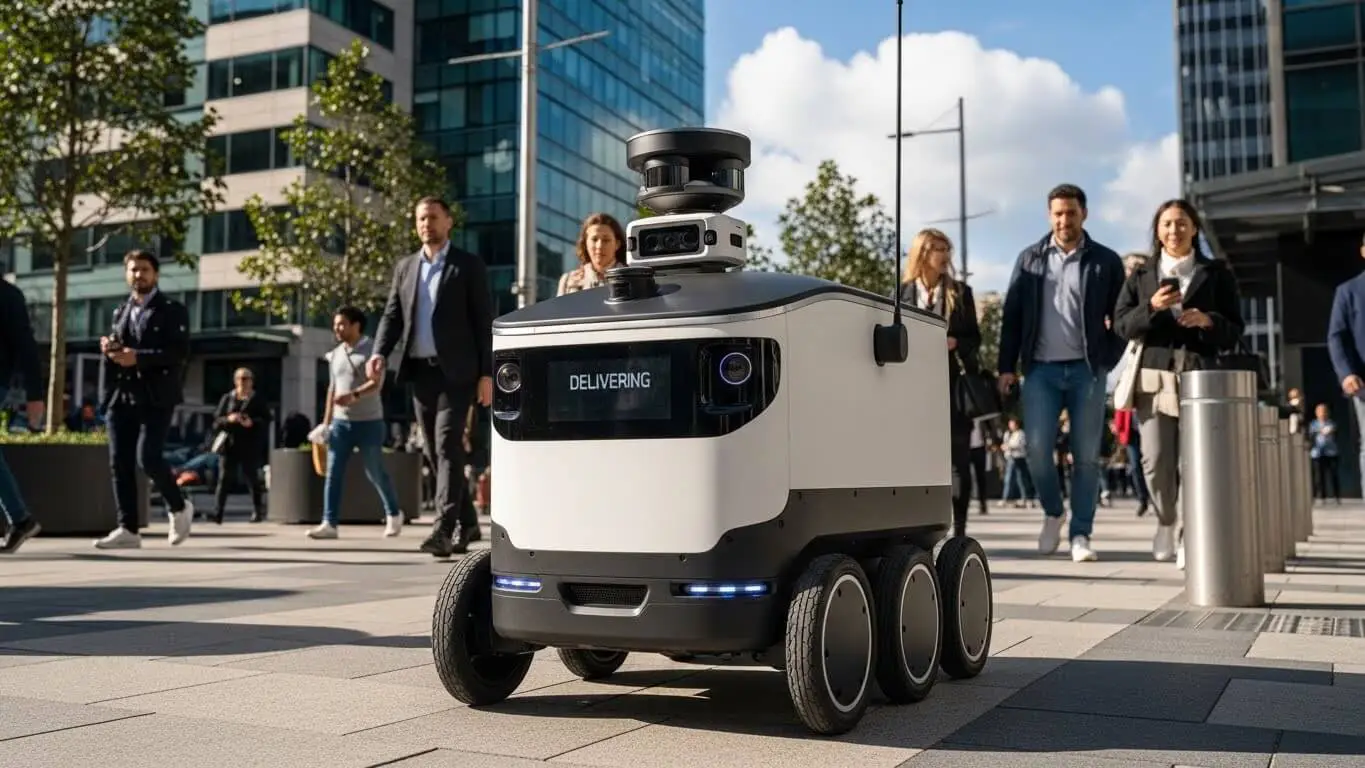
Self-driving cars are no longer just experiments, they are hitting our streets. At the same time, robotic delivery systems are transforming how goods reach us. Companies now deploy fleets of small delivery robots that skillfully navigate sidewalks, crosswalks, and crowded pedestrian areas. These robots handle food and package deliveries in busy city centers, working alongside people even during peak hours.
These systems rely on a mix of computer vision, GPS navigation, and real-time obstacle detection. Cities like San Francisco, Los Angeles, and Austin now see these robots regularly on their streets. They cut delivery costs by up to 60% compared to traditional couriers and speed up delivery times for urgent orders.
Revolutionizing Freight Transport
Driverless semi-trucks are changing long-haul freight like never before. These autonomous trucks stick to specific highway routes, handling the long, monotonous stretches while human drivers manage city streets and loading. By teaming up human skill with machine precision, logistics are becoming much faster and smoother. These trucks can keep moving without breaks, slashing cross-country delivery times by 30–40%.
AI-Integrated Service Robots in Commercial Spaces
Service robots with built-in AI are now common in hotels, stores, and offices. You’ll see them handling tasks from security patrols to helping customers. In hotels, they deliver room service and bring amenities straight to guest rooms. In stores, they answer questions and guide shoppers to the right sections.
Offices also rely on these robots for maintenance. They clean floors, manage waste, and inspect facilities. The robots quickly learn the building layout, adapt to changes, and communicate with management systems to work more efficiently.
Growth of Industrial Automation and Robotic Process Automation (RPA)
The manufacturing industry is changing fast. Digital technology is pushing companies to adopt advanced industrial automation like never before. Traditional production methods are giving way to smart factories, where robots handle complex tasks with precision that humans can’t match. This change is visible in industries like automotive, electronics, and pharmaceuticals—sectors where speed and accuracy are key to staying competitive.
At the same time, the robotic process automation (RPA) market is booming. Experts predict it will exceed $30.85 billion by 2030. Adoption is accelerating, and within five years, RPA is expected to be widespread. Companies are investing heavily because the technology delivers strong returns, making it a smart business move.
Why RPA Is Winning in 2026
The reasons behind this surge in adoption are clear:
- Increased operational efficiency: RPA enables continuous production cycles without any slowdowns due to fatigue.
- Error reduction: RPA minimizes defects in quality-sensitive applications, resulting in near-zero defect rates.
- Cost savings: RPA reduces labor costs and minimizes waste in production processes.
- Improved customer service: RPA leads to faster order fulfillment and consistent product quality.
The Role of Cobots
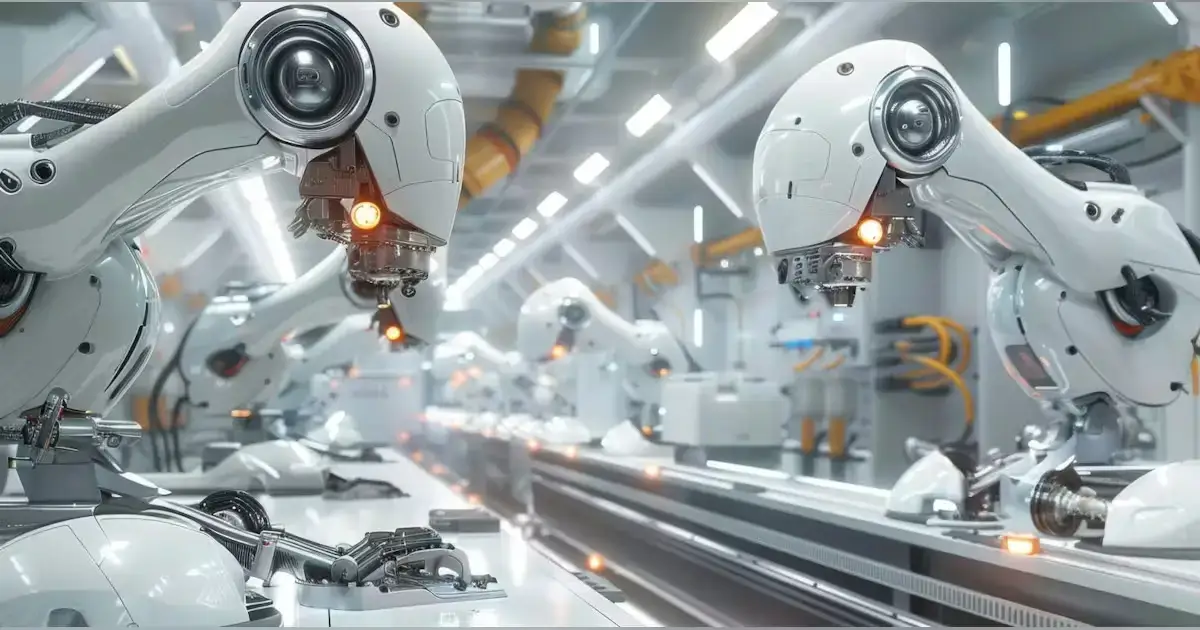
Cobots, or collaborative robots, are changing the way factories operate. Unlike traditional robots that need safety barriers, cobots work side by side with humans. They learn from people in real time, adapting as they go. Cobots handle repetitive tasks like assembling parts or inspecting quality, freeing human workers to focus on problem-solving and improving processes.
The Impact of IIoT
The Industrial Internet of Things (IIoT) works like the nervous system for robotic systems. Sensors on production equipment collect real-time data on performance, wear, and environmental conditions. This constant stream of information powers predictive maintenance tools that spot issues before they cause costly downtime. Instead of waiting for machines to break, companies can act early, saving millions in lost production.
The future of industrial robotics is bright, with businesses increasingly investing in automation technologies.
Integration of Artificial Intelligence with Robotics
The combination of AI and robotics is one of the most important AI robot trends changing the industry. This integration turns robots from being machines with fixed programs into flexible systems that can learn, improve their performance, and make smart decisions on the spot.
Self-Optimizing Networks and Autonomous Decision-Making
AI integration in robotics allows machines to examine how they operate and make adjustments without needing human help. Self-optimizing networks empower robotic systems to:
- Continuously monitor how well they’re performing
- Spot inefficiencies in how they move or use energy
- Change their operations to be more productive
- Predict when maintenance is needed before breakdowns happen
- Adapt to shifting environmental conditions in real-time
This ability also applies to energy-efficient AI robots that can intelligently control their power usage. Robots with AI algorithms now assess task priorities, optimize route planning to reduce energy consumption, and enter low-power modes during periods of inactivity—all without manual programming.
AI Agents Augmenting Human Workforce Capabilities
The use of AI agents within robotic systems creates a powerful partnership between human creativity and machine efficiency. These smart assistants take care of repetitive, time-consuming tasks that used to take up valuable human hours:
- Data entry and processing: AI-powered robots extract information from documents, validate data accuracy, and populate databases with minimal error rates.
- Inventory management: Autonomous systems track stock levels, predict reorder points, and generate purchase orders based on historical patterns and real-time demand.
- Quality control inspection: Computer vision-enabled robots identify defects, inconsistencies, and anomalies faster than human inspectors while maintaining consistent standards.
This automation doesn’t replace human workers—it enhances their roles. Your team members can redirect their focus toward strategic planning, customer relationship building, and creative problem-solving while AI agents handle the operational tasks.
Optimizing Data Center Operations Through AI-Driven Algorithms
Data centers are a prime example of where AI-driven robotics are making a significant impact on efficiency. These facilities use large amounts of energy for cooling, power distribution, and climate control. With the help of AI-powered systems, these operations are now being managed with an unprecedented level of accuracy:
Google’s DeepMind AI reduced data center cooling costs by 40% through real-time optimization of cooling systems based on workload demands.
Market Dynamics and Workforce Transformation Due to Robotics
By 2026, robotics will reshape the workforce in surprising ways. While headlines often warn about job losses from automation, the real picture is far more complex. Robotics is changing how we work, not just replacing workers.
The Numbers Behind Automation
Research shows that around 85 million jobs are at risk of being replaced by robotic automation and AI integration across various industries worldwide. This number may seem concerning at first, but it’s important to consider the other side of the equation:
- The same technological advancements are expected to generate approximately 97 million new jobs.
When we do the math, it reveals a net increase of 12 million positions. However, these new roles won’t simply be filling the shoes of those who lost their jobs. Instead, they will require entirely different skill sets focused on collaboration between humans and AI.
The Rise of New Job Roles
In this evolving job landscape, we can expect to see the emergence of roles such as:
- AI training specialists
- Robot coordinators
- Automation ethicists
- Human-machine workflow designers
These positions are becoming essential across industries as organizations implement advanced robotic systems.
Examples of Changing Job Requirements
To further illustrate this shift, let’s take a look at some specific examples:
- Manufacturing facilities that once relied solely on assembly line workers now require technicians who can troubleshoot collaborative robots (cobots), interpret data from industrial Internet of Things (IIoT) devices, and optimize task allocation between humans and robots.
- Retail environments need staff members who can effectively manage autonomous inventory systems while still providing the personal touch that customers appreciate.
- Healthcare facilities seek professionals capable of coordinating between surgical robots and medical teams to ensure seamless integration of technology into patient care processes.
Organizational Redesign in Response to Robotics
The impact of robotics goes beyond individual job titles; it also necessitates changes at an organizational level. Companies must confront the challenge posed by robotics-driven redesign throughout their entire structure.
Limitations of Traditional Hierarchical Models
Conventional hierarchical frameworks designed for human-only workforces struggle to accommodate intelligent automation. Simply inserting robots into existing workflows won’t yield optimal outcomes.
Rethinking Operational Models
Forward-thinking organizations are reevaluating their operational approaches from the ground up:
- Implementing hybrid team structures that combine human creativity with robotic precision
- Defining roles dynamically as AI capabilities continue to evolve
- Encouraging cross-functional collaboration between IT, operations, and human resources departments
- Establishing continuous learning programs to keep human workers ahead of automation trends
- Shifting performance metrics to focus on measuring synergy between humans and robots rather than individual output
Understanding the Role of Robots in Shaping Work
The successful companies in 2026 understand that robots aren’t here to replace humans—they’re redefining what it means for humans to work.
Training Employees for Collaboration with Robotics
Your employees will require training not only in technical abilities but also in how they can utilize robotic capabilities to enhance their own strengths. For example:
- A warehouse worker may transition into becoming a fleet manager overseeing automated delivery vehicles.
- A customer service representative might evolve into an experience designer crafting personalized interactions through AI-powered chatbots.
By equipping your workforce with these skills, you position them as valuable assets within an increasingly automated world.
The Future of Robotics Industry in 2026 and Beyond
The future of robotics depends on the smooth integration of various technologies working together. AI algorithms, IIoT sensors, and workflow automation platforms are creating an environment where robots don’t just perform tasks as programmed—they learn, adjust, and improve their operations instantly. This combination of technologies is giving rise to advanced robotic applications in manufacturing, healthcare, agriculture, and urban infrastructure. We’re seeing robots that can switch between jobs without extensive reprogramming, communicate with other machines to coordinate complex tasks, and predict maintenance needs before breakdowns happen.
Growth Potential and Challenges
The robotics market is set for strong growth, but it faces some key challenges. One big hurdle is adaptability—robots need to work across different industries without needing major redesigns. For instance, a robot built to manage warehouse inventory can’t just switch to a hospital and perform the same tasks without adjustments. Every industry has its own learning curve, safety rules, compliance standards, and operational needs that robots must learn and adapt to.
The Role of Hybrid Computing
Hybrid computing is key to making advanced AI-powered robots practical and cost-effective. It blends cloud, edge, and on-premises computing to strike the right balance between power and speed. Cloud platforms handle heavy AI training and complex data analysis. Edge computing lets robots make fast decisions on the spot, with no delays. On-premises systems keep data secure and ensure robots keep working even if the internet goes down.
This distributed setup lowers data transfer costs, boosts security, and helps robots operate efficiently in all kinds of environments—from remote mining sites to busy city streets.
Shaping the Future of Robotics
Innovation in robotics now focuses on creating flexible systems that can adapt to different use cases. We can expect to see:
- Standardized communication protocols that enable collaboration between robots from different manufacturers
- Plug-and-play sensor packages that enhance capabilities without requiring complete hardware replacements
- Open-source AI frameworks that speed up development processes
As these systems become more flexible and easier to use, deploying robotics is becoming more cost-effective. Companies that invest in this hybrid setup can seize new opportunities without being locked into proprietary systems. A great example is Amazon’s robotics research. Their teams are tackling complex problems with advanced robotics solutions. This research not only expands what robots can do but also sets a benchmark for future innovations in the field.
Moreover, a recent study on the robotics industry shows that, with smart strategies and technological progress, we are approaching a major shift in how robotics will be applied across different sectors.
Conclusion
The robotics revolution in 2026 represents a significant change in how machines interact with our world. Five major trends are driving this transformation:
- Advanced robotics penetrating consumer and industrial sectors through delivery systems and autonomous vehicles
- Industrial automation and RPA reshaping manufacturing with collaborative robots and predictive maintenance capabilities
- AI integration unlocking self-optimization, energy management, and intelligent task automation
- Market dynamics creating 97 million new jobs while displacing 85 million traditional roles
- Strategic infrastructure combining cloud, edge, and on-premises computing to support next-generation applications
These points show just how much automation is transforming industries—from factory floors to retail stores, from data centers to city delivery networks. Workers are evolving too, learning new skills and finding ways to collaborate with intelligent machines.
The future of robotics looks bright. We are seeing the first sparks of a revolution that will reshape productivity, efficiency, and human potential in every sector. Success will come to those who adapt, invest wisely in infrastructure, and embrace the hybrid model of human-AI collaboration.
Want to test your knowledge of these emerging technologies? Try our latest quizzes to challenge yourself and stay ahead in this fast-changing world.
Frequently Asked Questions
The robotics revolution in 2026 is driven by advanced robotics expanding into both consumer and industrial sectors, rapid growth of industrial automation and robotic process automation (RPA), integration of artificial intelligence with robotics for enhanced capabilities, significant workforce transformation due to AI-human collaboration, and continuous innovation supported by hybrid computing infrastructures.
AI integration is unlocking new robotic capabilities such as self-optimization, energy-efficient operations, and automation of routine tasks. AI-driven algorithms optimize data center operations including cooling and HVAC systems, while AI agents augment human productivity and creativity across multiple sectors.
Autonomous vehicles and service robots are revolutionizing transportation and retail logistics by enabling last-mile delivery through sidewalk robots, deploying driverless semi-trucks for long-distance freight transport, and integrating AI-powered service robots in hospitality, retail, and office environments for maintenance, security, and customer engagement.
Robotic Process Automation (RPA) is experiencing rapid market growth with projections beyond $3 billion by 2025. It enhances business efficiency by increasing operational speed, reducing errors, lowering costs, improving customer service, and facilitating digital transformation across manufacturing and industrial sectors.
While automation may displace an estimated 85 million jobs globally, it is also expected to create around 97 million new roles that require humans to collaborate effectively with AI agents. Organizations will need to redesign their models to integrate intelligent automation alongside human talent, fostering AI-human collaboration for future workforce dynamics.
Recommended Resources for Curious Minds
If you’re looking to dive deeper into the technologies and themes discussed in this article, these hand-picked resources are perfect for expanding your knowledge and getting hands-on with the future.
- Life 3.0: Being Human in the Age of Artificial Intelligence: This thought-provoking book by Max Tegmark explores how AI will reshape our future—from our jobs and laws to our very sense of what it means to be human.
- Makeblock mBot2 Coding Robot Kit: A perfect entry point for anyone wanting to move beyond theory; this hands-on kit lets you build and program your own robot, mirroring the real-world mechanics of industrial automation.
- Artificial Intelligence: A Guide for Thinking Humans: Melanie Mitchell provides a clear, jargon-free look at how AI actually works, helping you distinguish between the science fiction myths and the real-world capabilities of smart machines.
- Elegoo Smart Robot Car Kit: For those fascinated by the autonomous vehicle trends mentioned, this kit offers a practical way to learn how sensors and software work together to navigate obstacles in real-time.
The links above are affiliate links. If you purchase through them, we may earn a small commission at no additional cost to you. We only recommend resources we genuinely believe enhance learning about Robotics.